3 hr
Seville Priority Access: Cathedral, Giralda & Royal Alcázar Tour
- Priority access
- Skip the queue
- Mobile voucher
- Free cancellation
Seville Cathedral Tickets — Reserved Entry, Giralda Access & Guided Tours
Gothic vaults hold the morning, orange trees hold the courtyard.
Compare fares, pick the fit — all bookings are mobile-voucher and eligible for free cancellation where shown.
3 hr
3 hr
1 hr 30 min
| Experience | Duration | Rating | Skip-the-line | Guide | Small group | Free cancel. | Price | |
|---|---|---|---|---|---|---|---|---|
|
Skip-the-line
Most popular
Seville Priority Access: Cathedral, Giralda & Royal Alcázar Tour
|
3 hr | ★ 4.8 | ✓ | ✓ | — | ✓ | €53 | Book → |
|
Skip-the-line
Seville Skip-the-Line: Alcázar, Cathedral & Giralda Tour
|
3 hr | ★ 4.8 | ✓ | ✓ | ✓ | — | €53 | Book → |
|
Guided Experience
Seville Cathedral & Giralda Tower Fast-Track Guided Tour
|
1 hr 30 min | ★ 4.6 | ✓ | ✓ | ✓ | — | €31 | Book → |
Worth it for nearly everyone; skip only if rushed
At 14 EUR, Seville Cathedral Tickets buy the world's largest Gothic cathedral, the tomb of Christopher Columbus borne by four bronze kings, the gilded Retablo Mayor, and the Giralda climb — a Almohad minaret ascended by 34 ramps rather than stairs, ending in the best free-standing view over the old town. Entradas a la Catedral de Sevilla also cover the Patio de los Naranjos and the sacristy paintings by Murillo and Zurbarán. Reckon it as roughly 3.50 EUR per major element. The free alternative — standing in Plaza Virgen de los Reyes admiring the exterior and the bell tower — is genuinely good, and if your trip has one slot left, that view costs nothing. But you cannot see the retablo or the tower panorama from outside. Seville Cathedral Tickets tours pay off hardest for first-timers and anyone drawn to UNESCO heritage architecture; committed church-skippers will not be converted by a Seville Cathedral Tickets tour.
Bottom line: Fourteen euros for a UNESCO Seville landmark, a Columbus tomb, and a tower panorama is one of the fairer trades in Andalusia — buy the ticket.
Most visitors book both, so the real question behind Seville Cathedral Tickets is sequencing, not either-or — go to the Cathedral first if mornings and Gothic scale matter more to you, or the Alcázar first if Moorish palace rooms are the priority. At 14 EUR, the Cathedral is the cheaper anchor of any Seville landmarks itinerary and pairs naturally with a skip-the-line Seville Cathedral tour before or after the palace.
|
Top pick Seville Cathedral |
Royal Alcázar | |
|---|---|---|
| What you see | World's largest Gothic cathedral, Giralda tower | Royal palace rooms, courtyards, gardens |
| Architectural style | Gothic, with Almohad-era Giralda | Mudéjar, Moorish-Christian fusion |
| Typical visit duration | 1–1.5 hours | 2–3 hours |
| Price per adult | 14 EUR (general ticket) | 15.50 EUR (general admission) |
| Best time of day | 11:00–12:30, before queues build | First hour after opening or late afternoon |
| Indoor/outdoor balance | Mostly indoor, rooftop optional | Mixed — palace rooms plus large gardens |
| Who should prioritize which first | Architecture and history-first travelers | Garden lovers and photography-first travelers |
| See tickets & prices |
Verdict: Neither site replaces the other, but if a short Seville stay forces a choice, the Cathedral rewards an early-morning first stop while the Alcázar deserves the longer block later in the day for its gardens.
Hand-picked experiences loved by thousands of travelers
1-2 hours
Skip the ticket line to explore one of the world's largest cathedrals and climb the Giralda for sweeping Seville views.
Flexible, self-guided visit
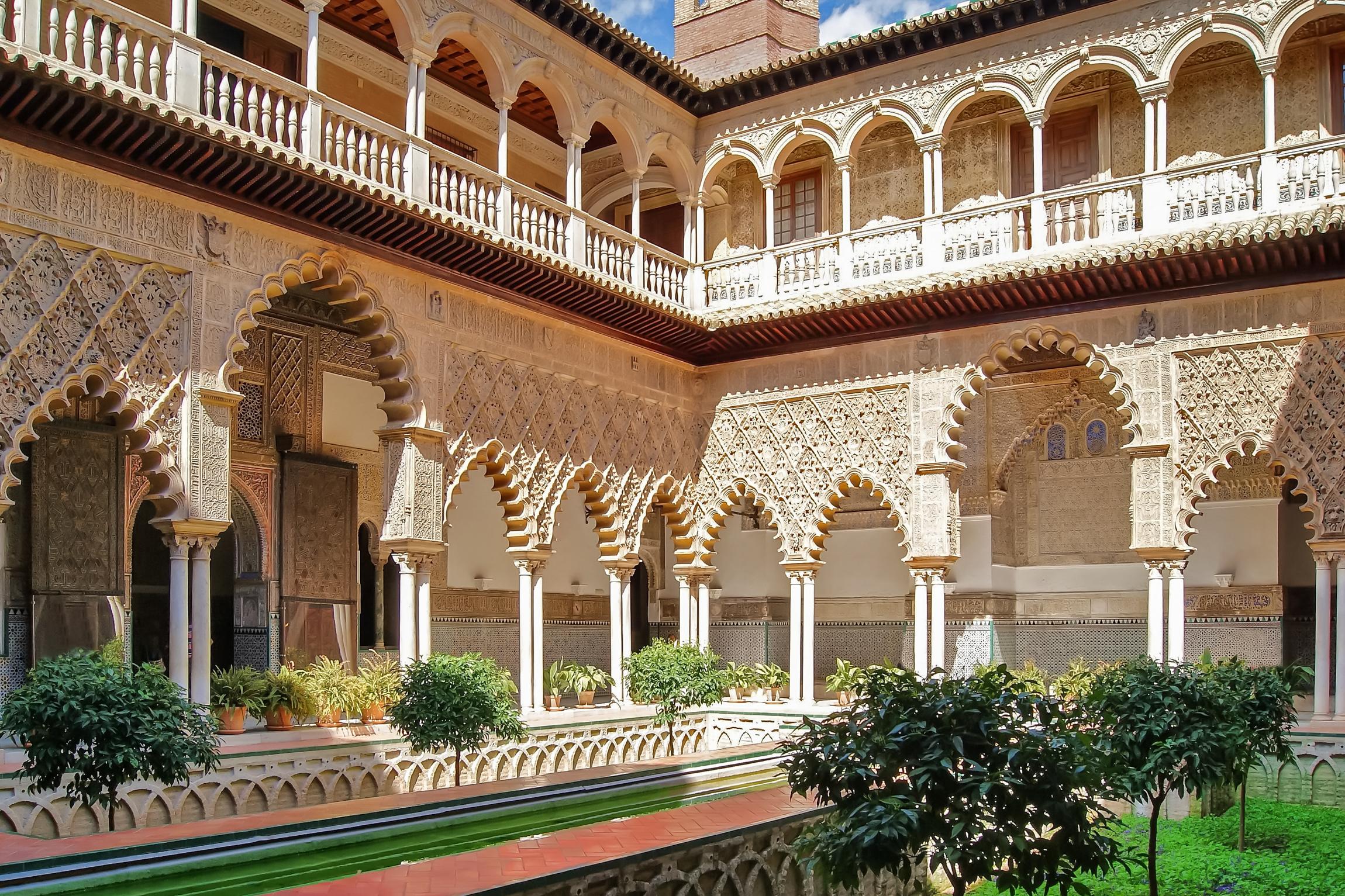
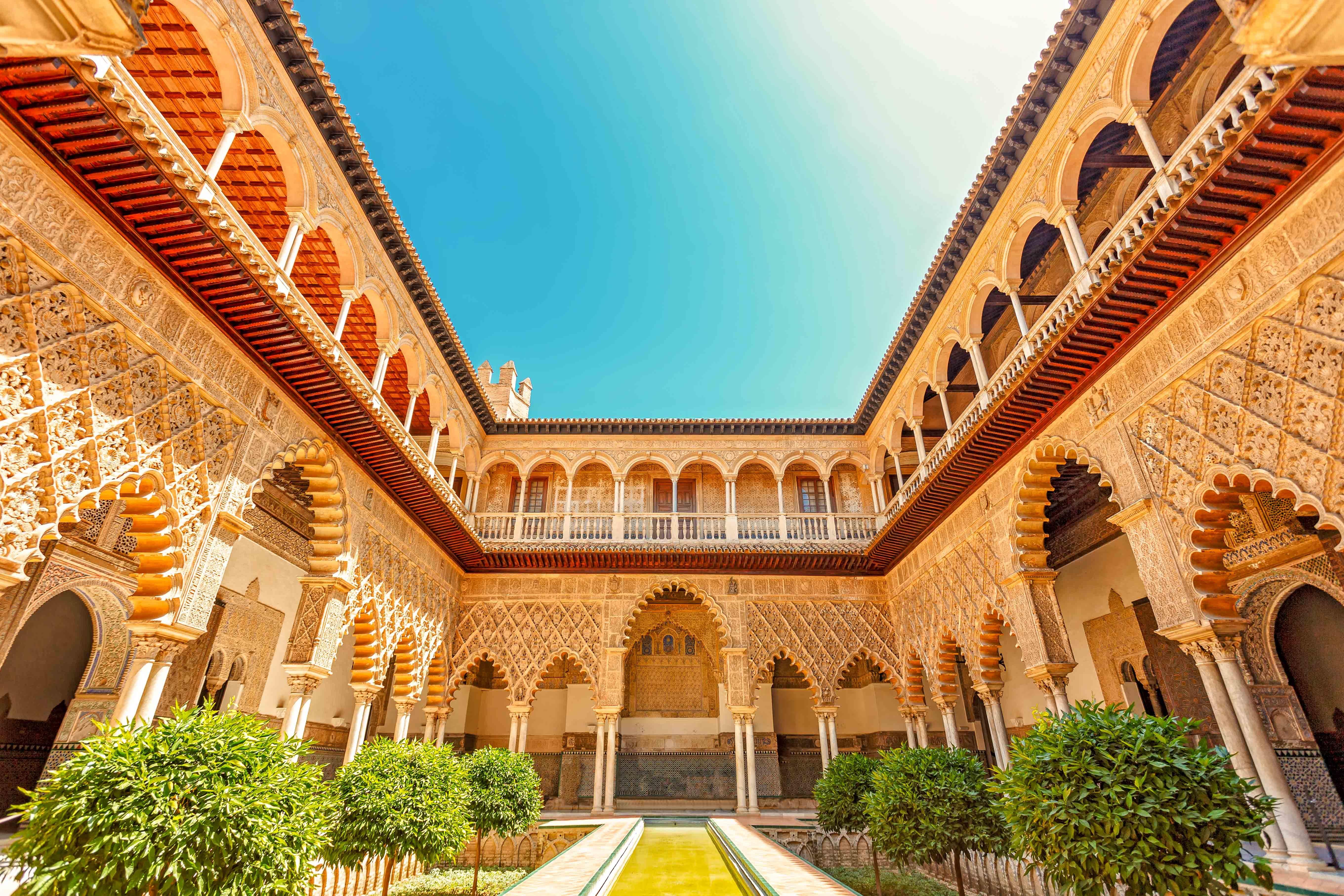
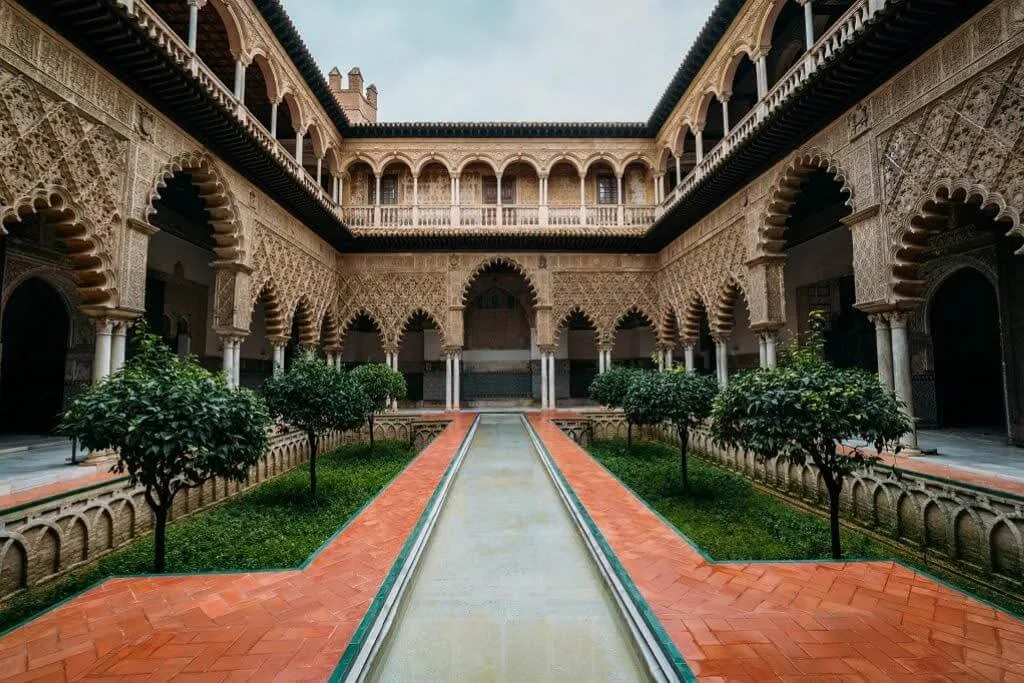
Skip the guesswork and step into 11 centuries of Moorish and Christian palace splendor.
1.5 hours
Skip the line into Seville's UNESCO palace with an expert guide, then wander its gardens at leisure.
3 - 3.5 hours
See two UNESCO icons in one outing: Seville's Gothic cathedral, the Giralda, and the Royal Alcázar.
40 minutes
Free Cancellation
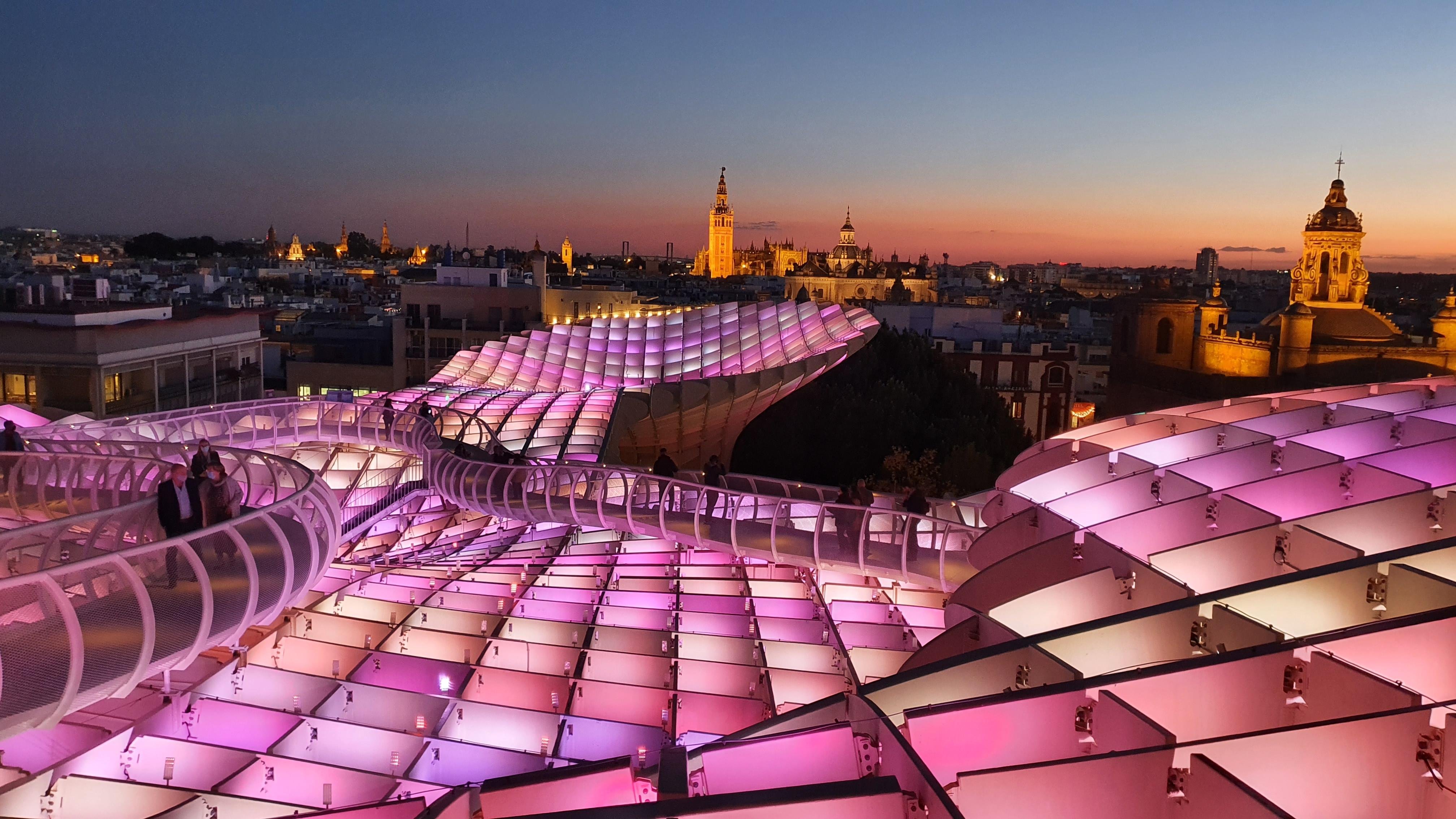
Climb Seville's iconic wooden landmark for 360° views, an immersive film, and a nightly LED light show.
2 hours
Free Cancellation
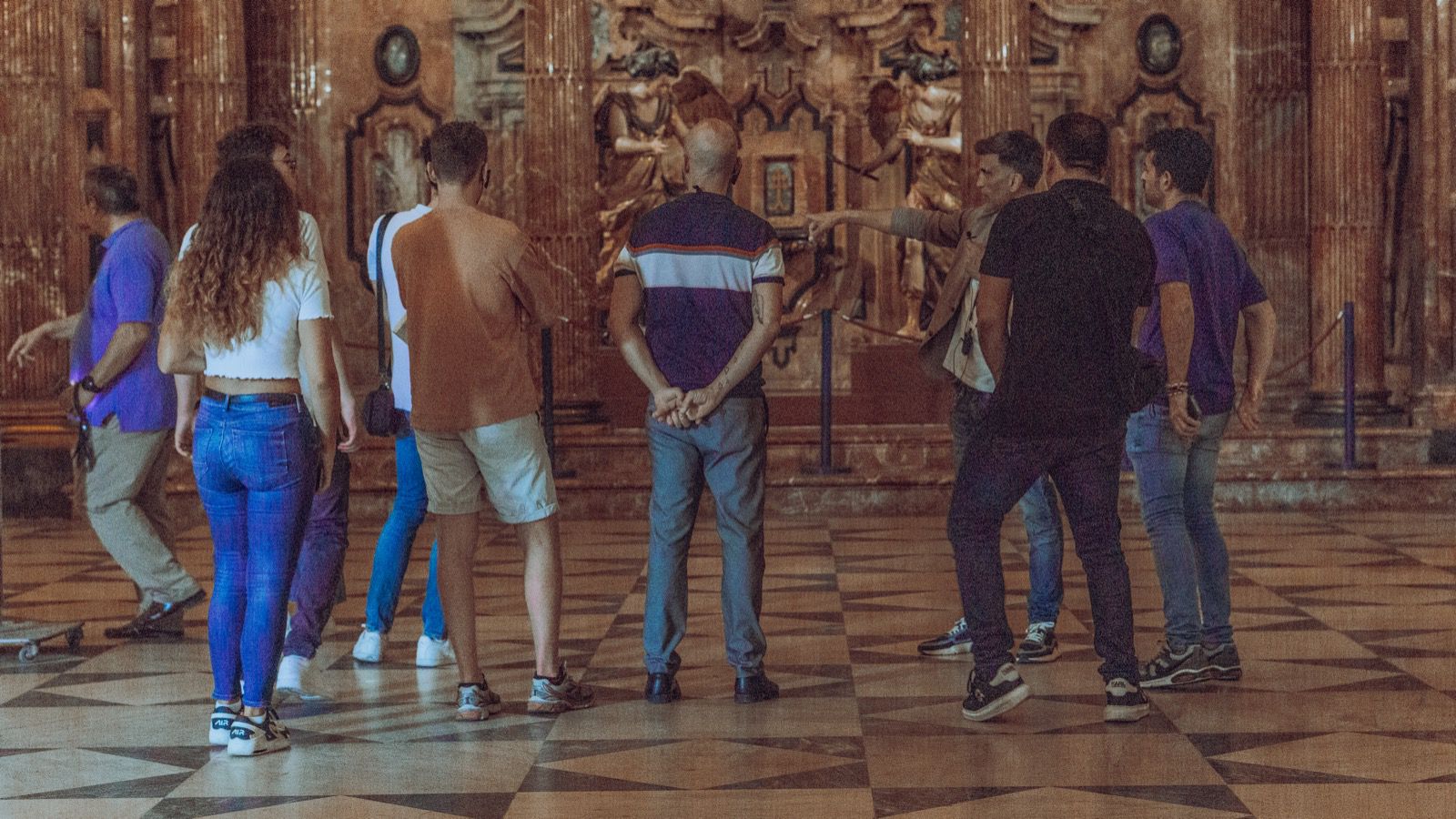
Explore Seville's iconic landmarks with a licensed local guide in a relaxed, small-group setting.
10 hours
Free Cancellation
Full-day trip from Seville to Córdoba: priority access to the Mosque-Cathedral, Jewish Quarter & Carmona stop.
8 hours
Free Cancellation
Private day trip from the Algarve to Seville with flamenco, top landmarks & Andalusian charm
Show your Seville Cathedral tickets confirmation and pass through the security check into the Patio de los Naranjos
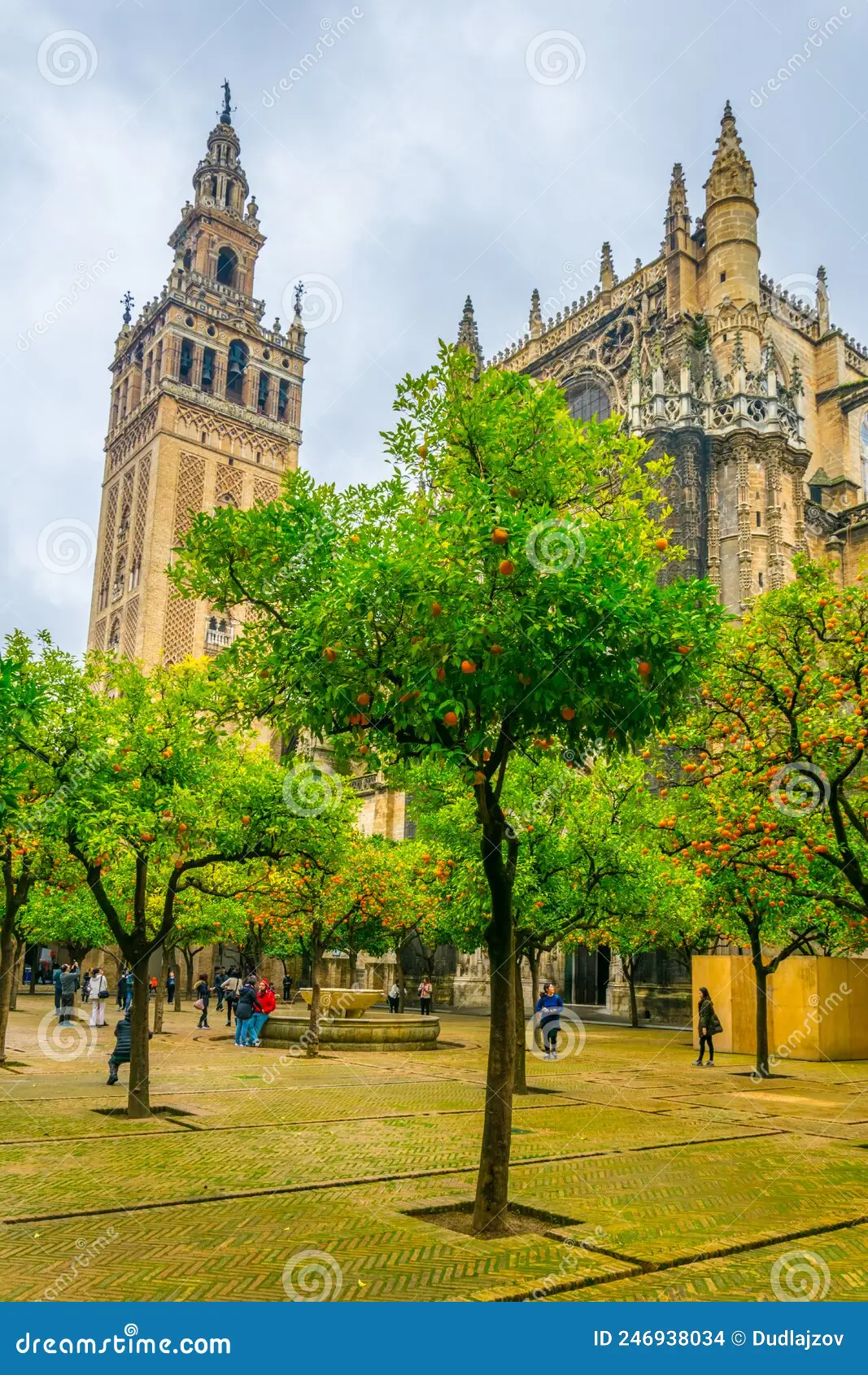
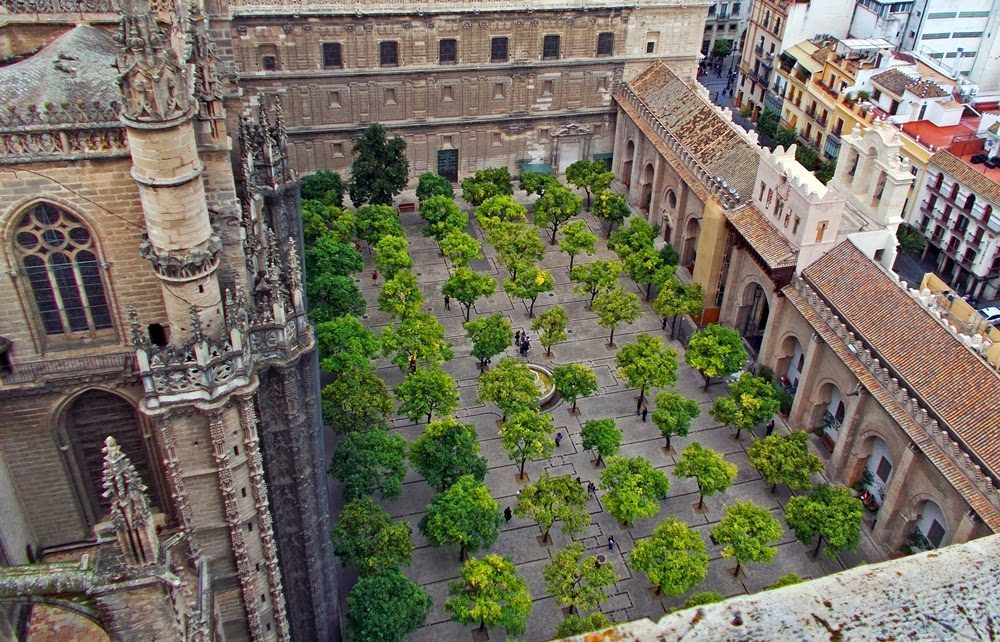
Walk the former mosque courtyard among orange trees and the old Visigothic fountain
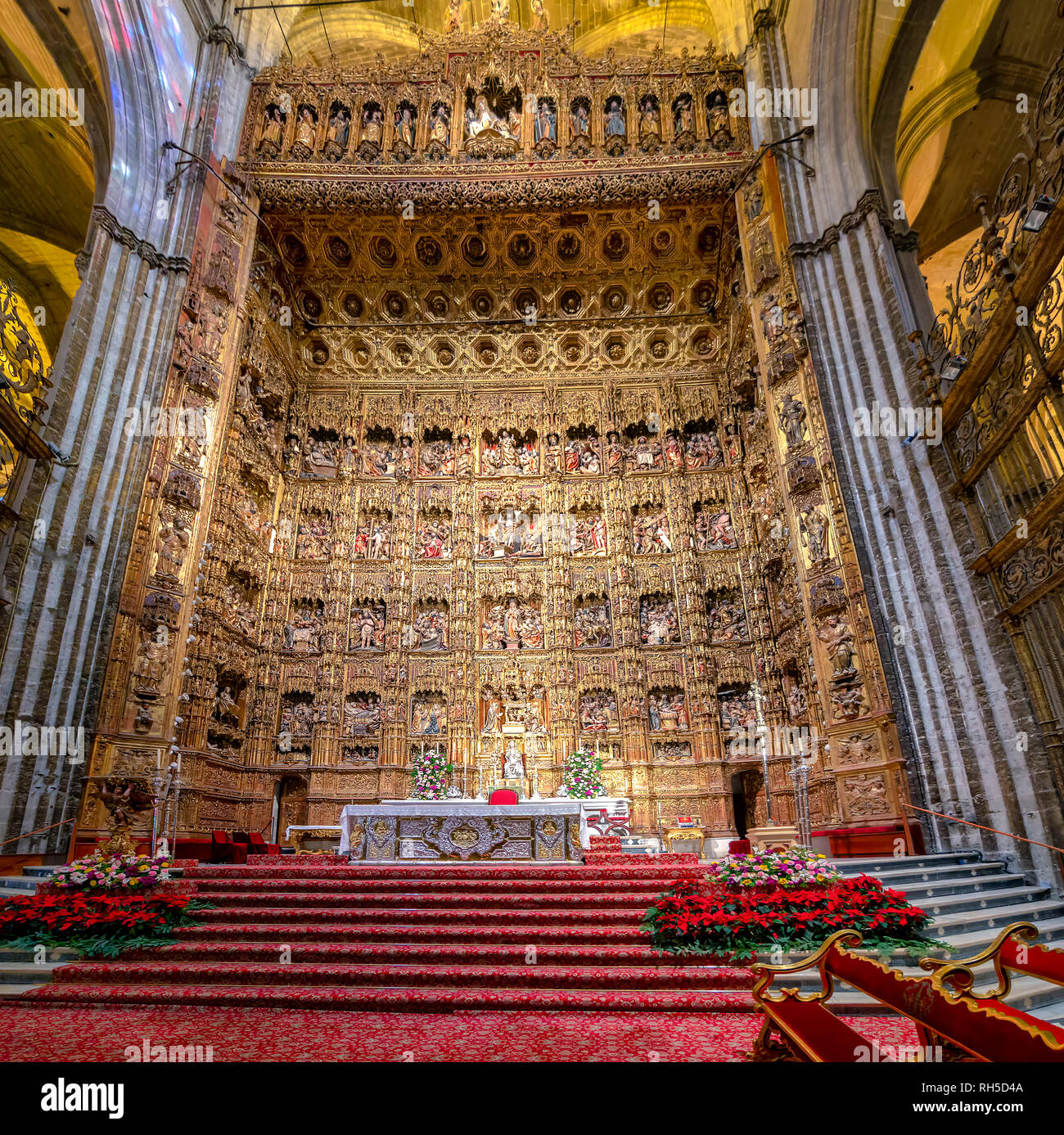
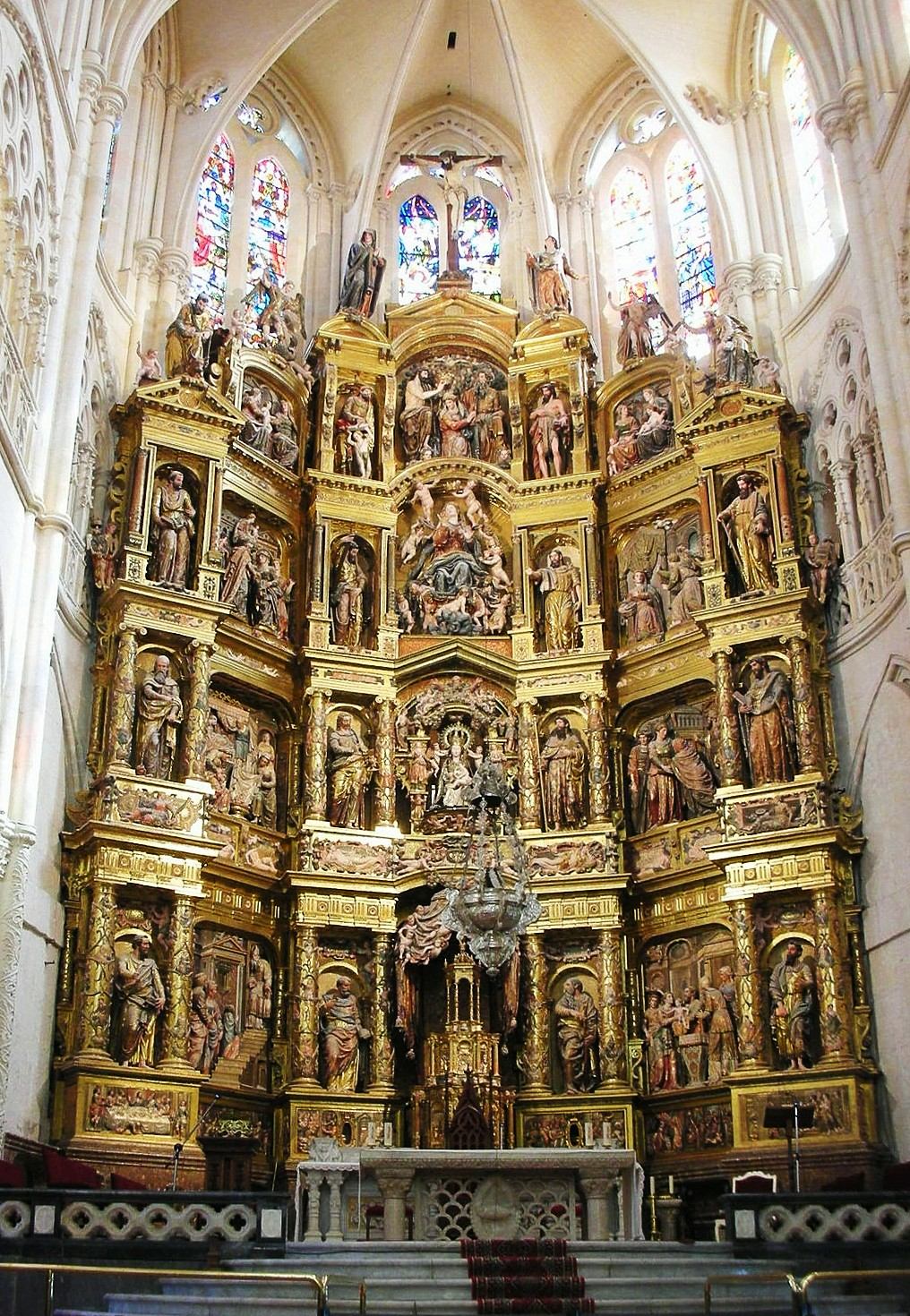
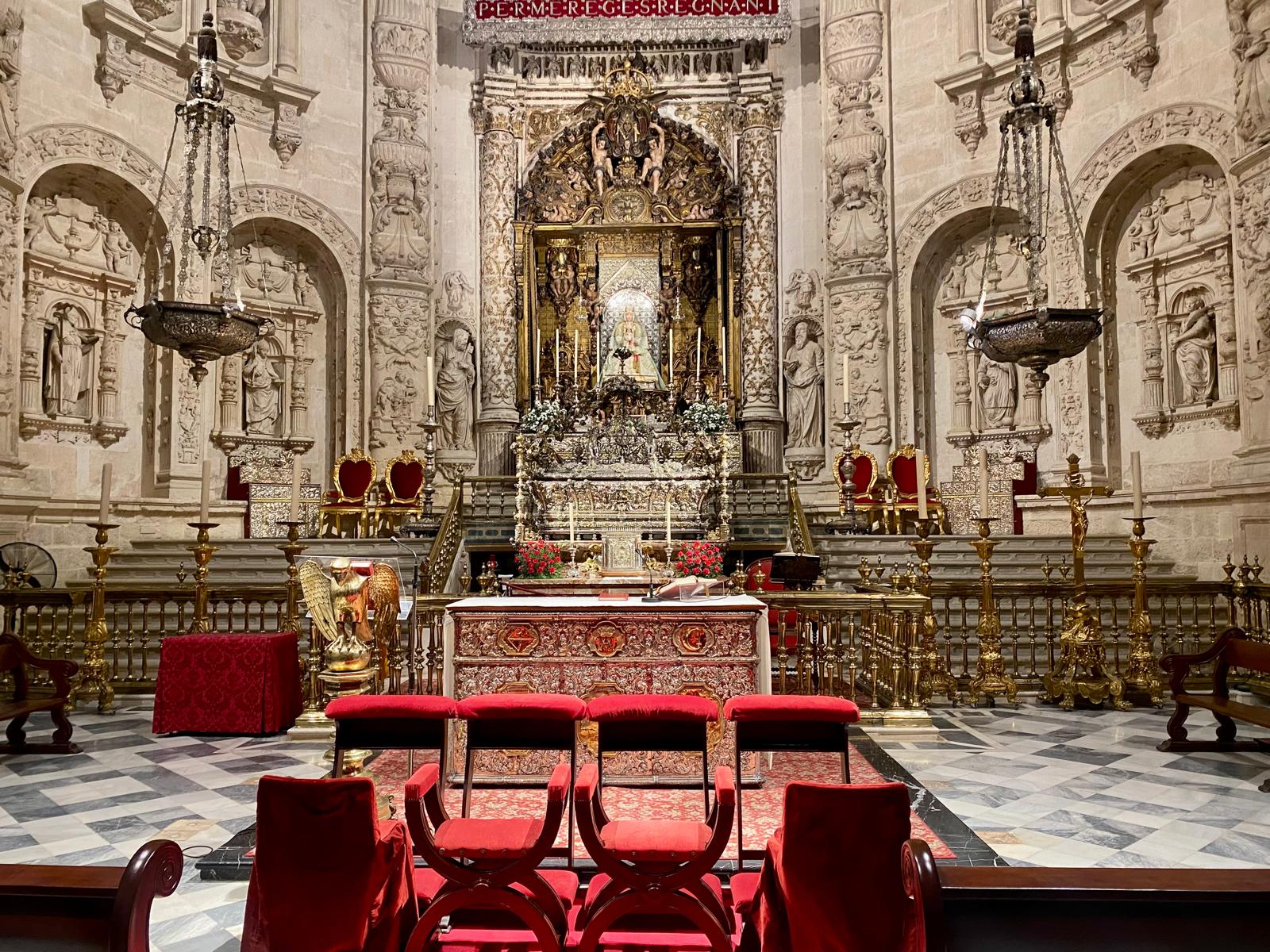
Take in the largest gilded altarpiece in the world, carved with 45 biblical scenes
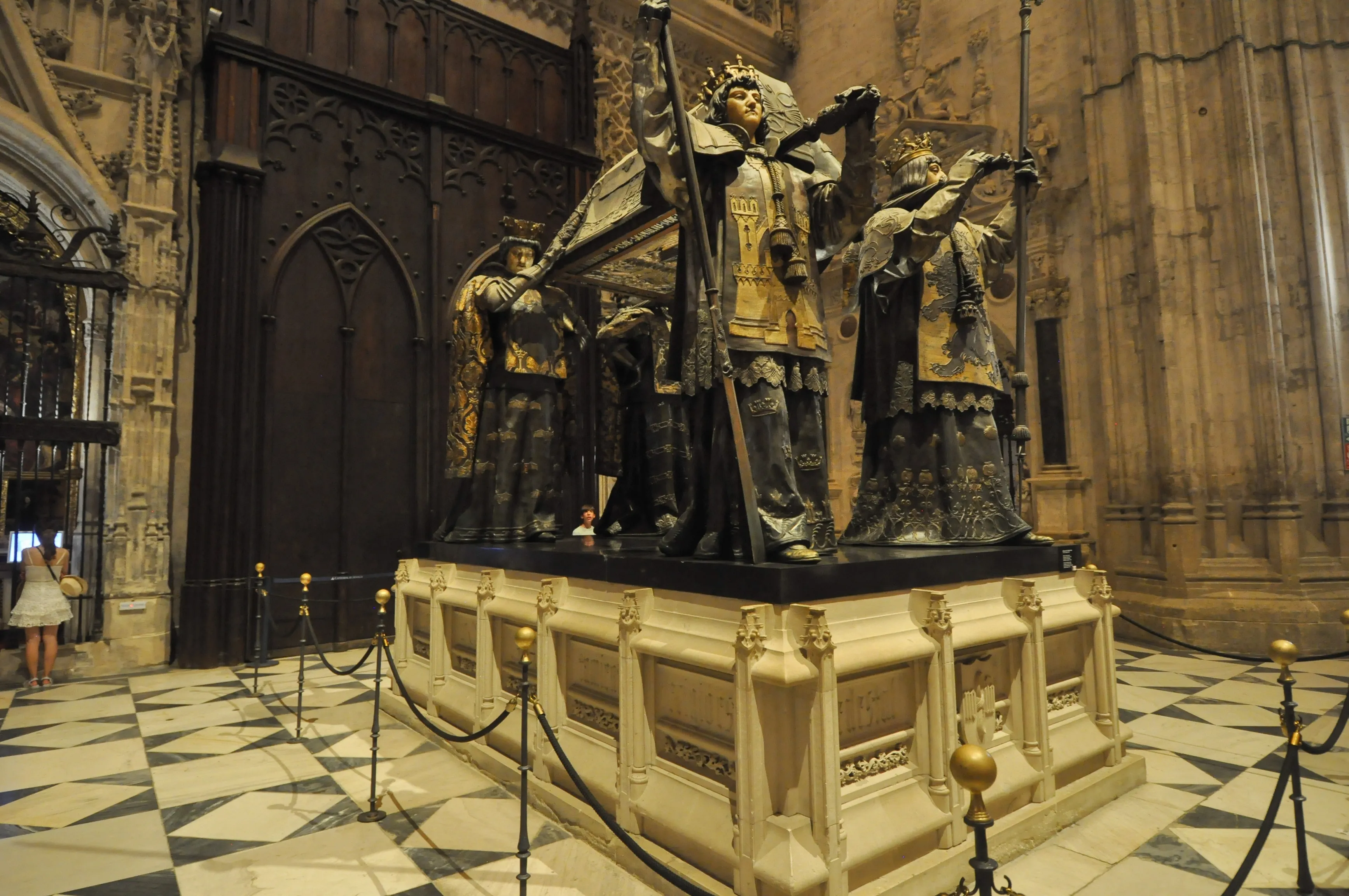
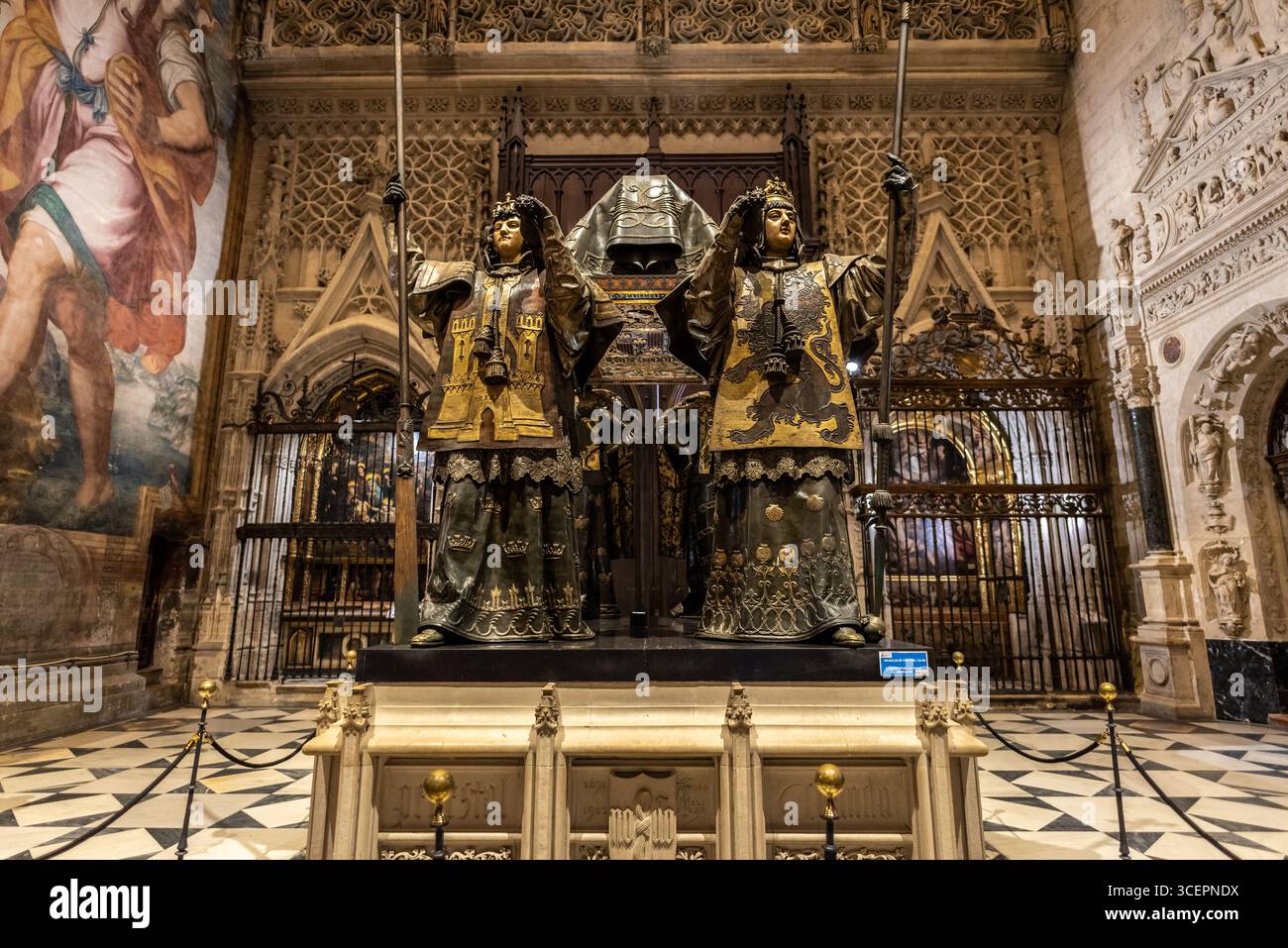
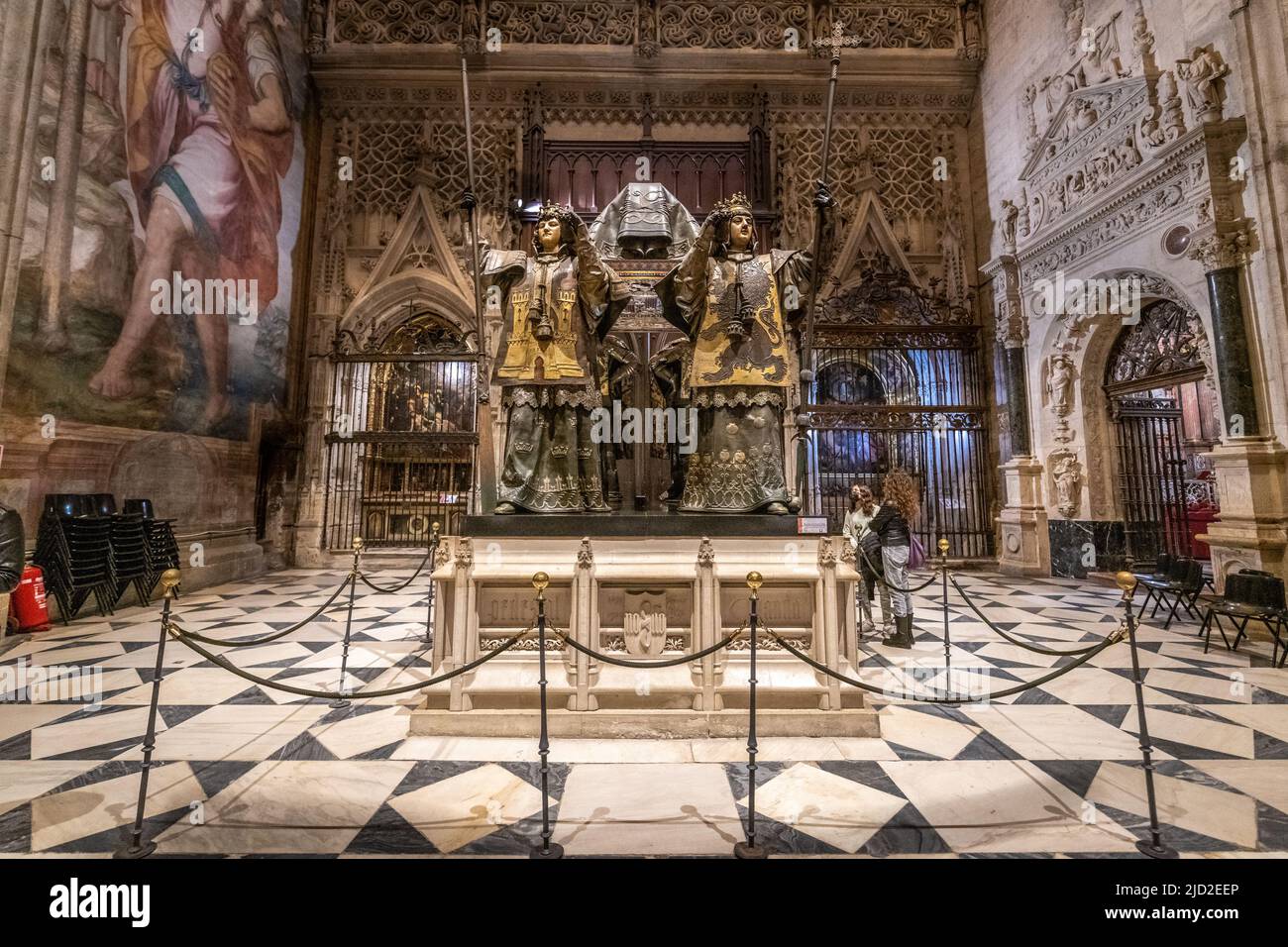
See the sarcophagus borne by four statues representing the kingdoms of Aragón, Castile, León, and Navarre
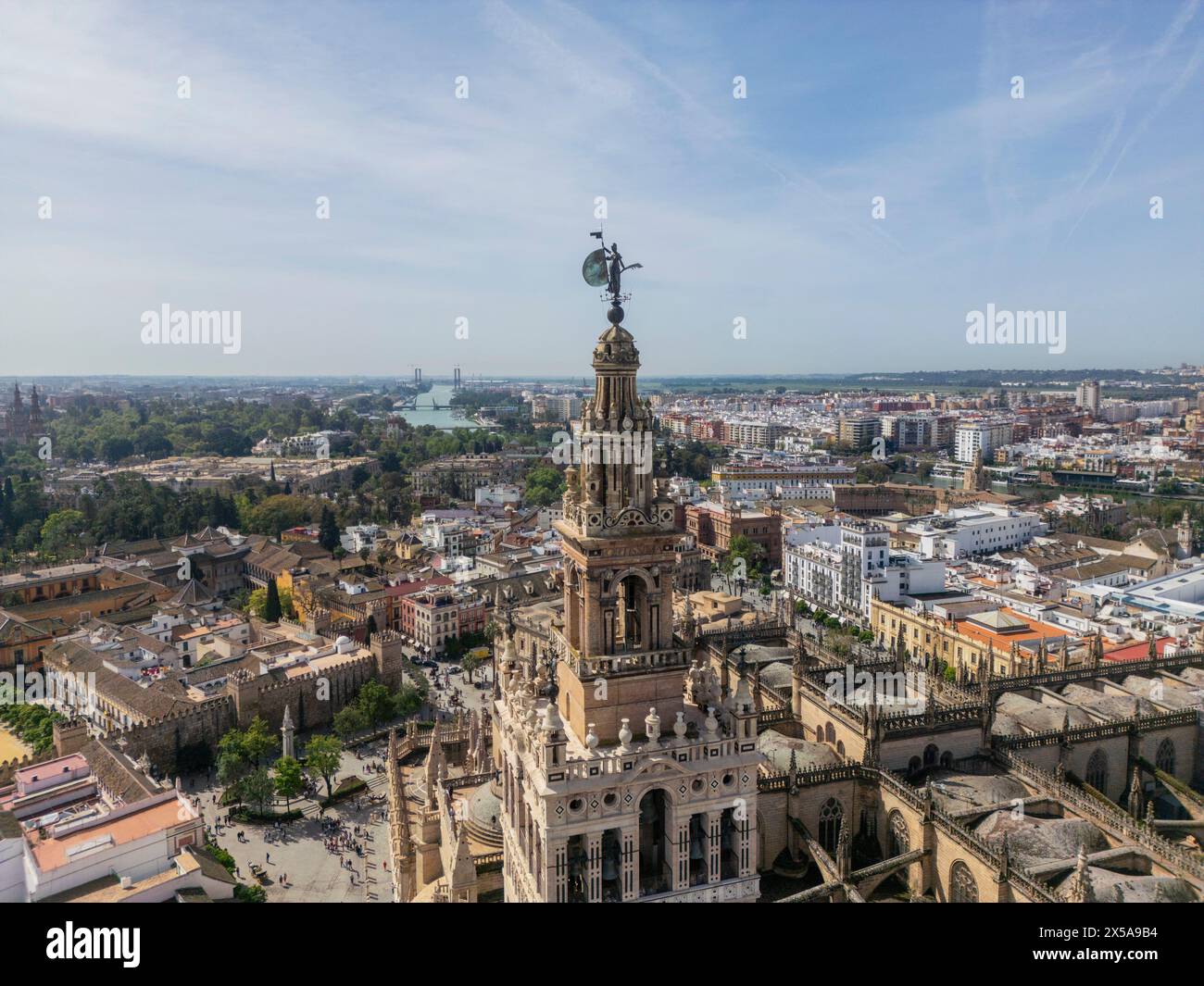
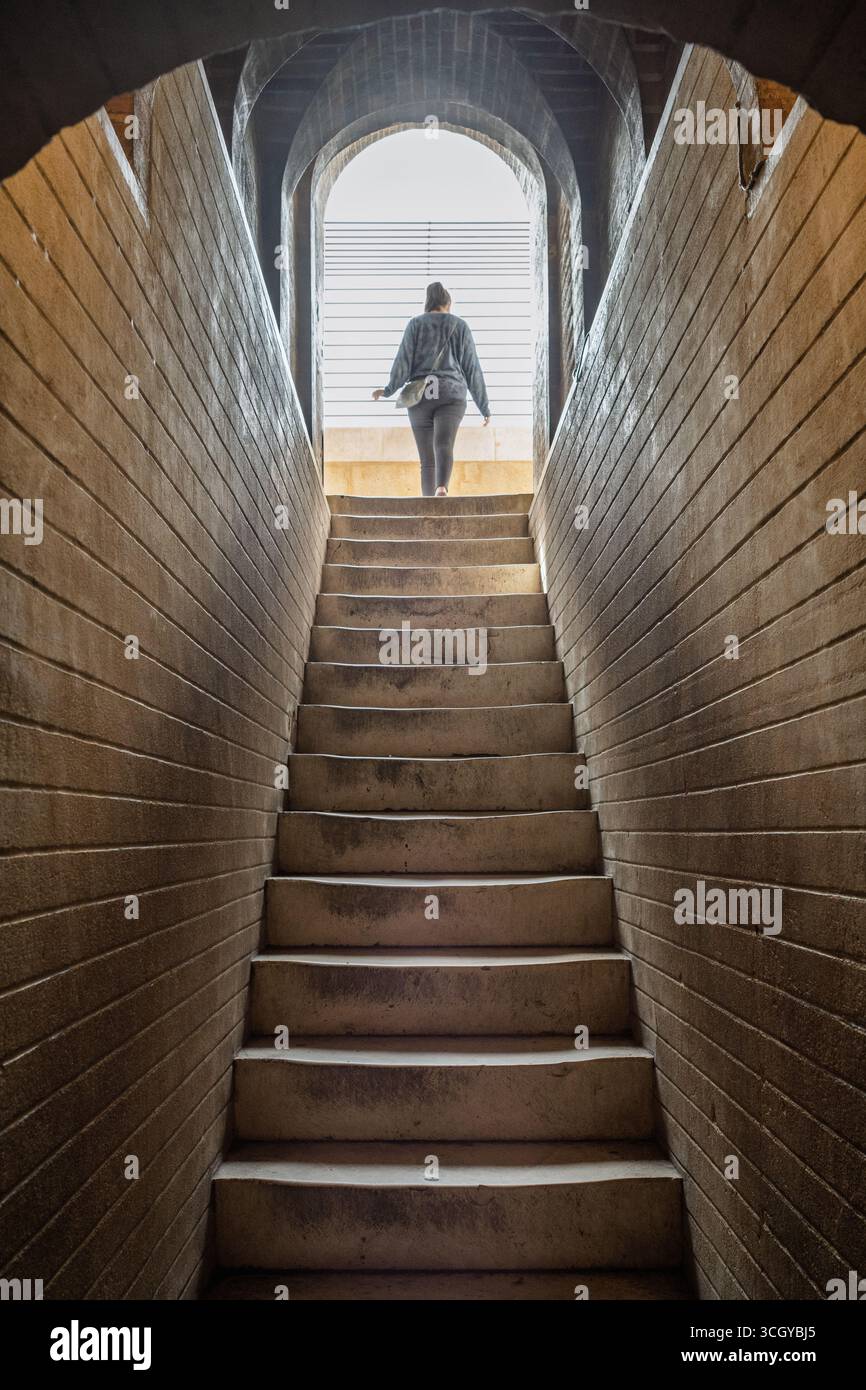
Ascend the 35 ramps of the former minaret for rooftop views across the old town
Browse the cathedral museum's paintings and silverwork before leaving
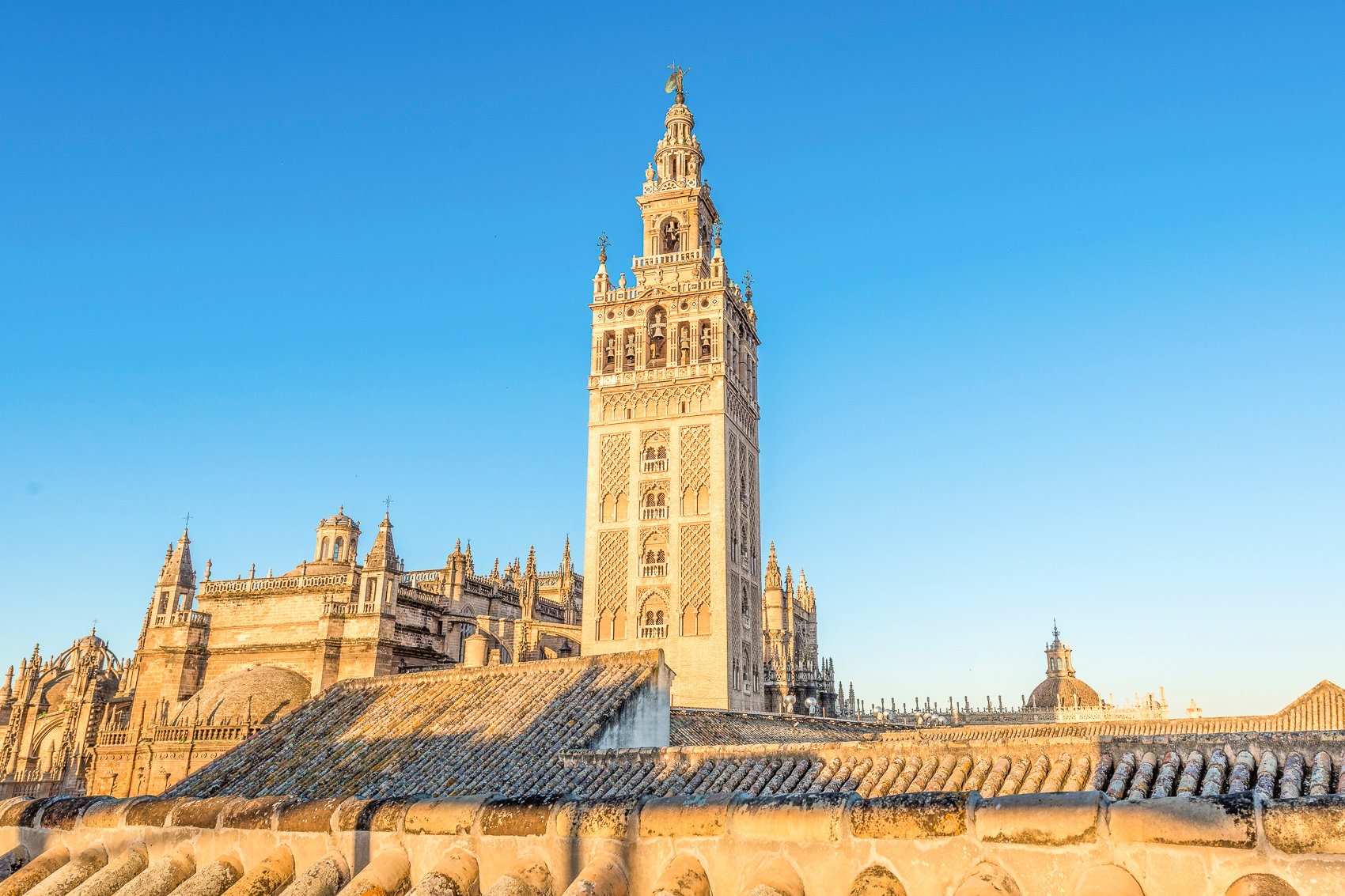
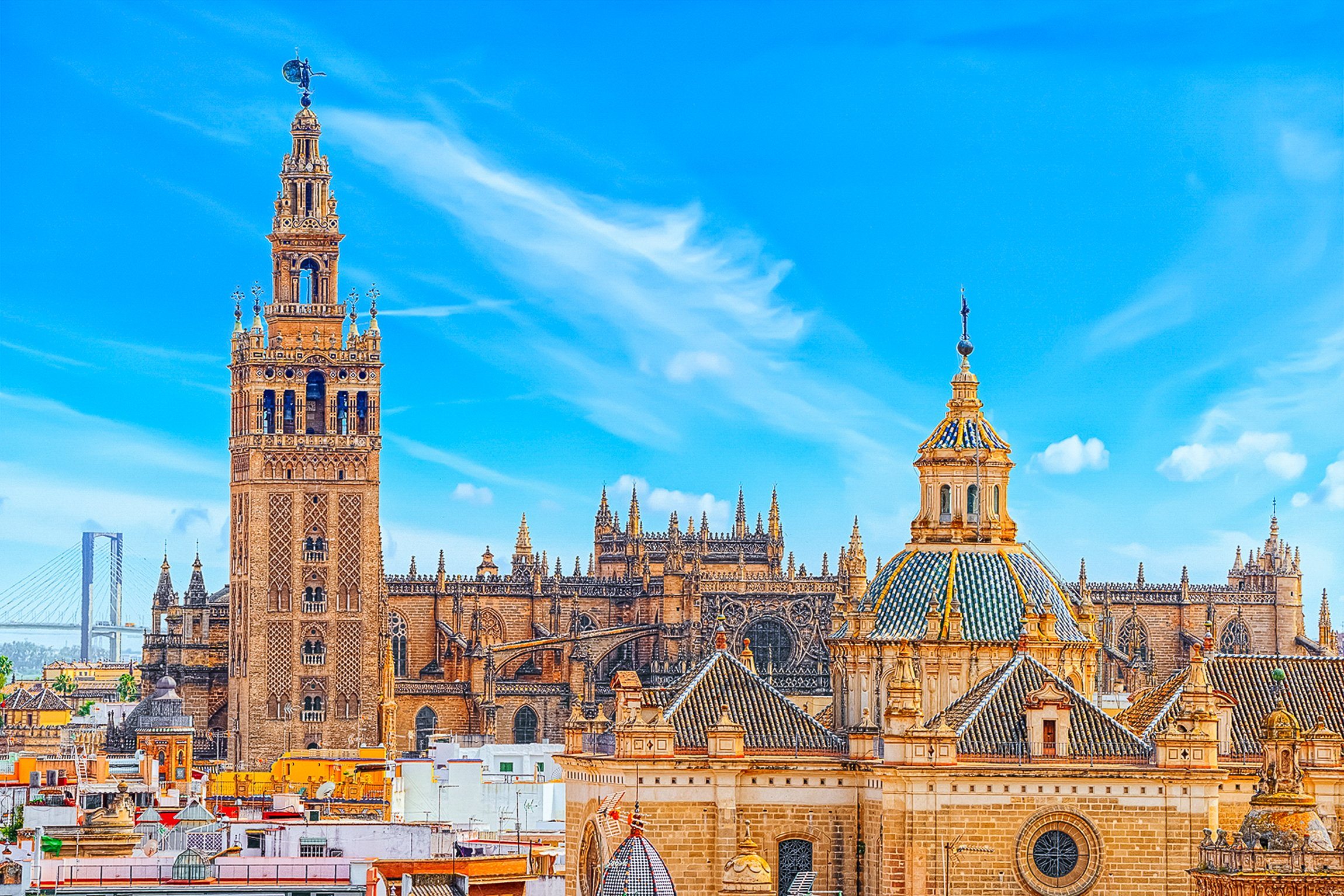
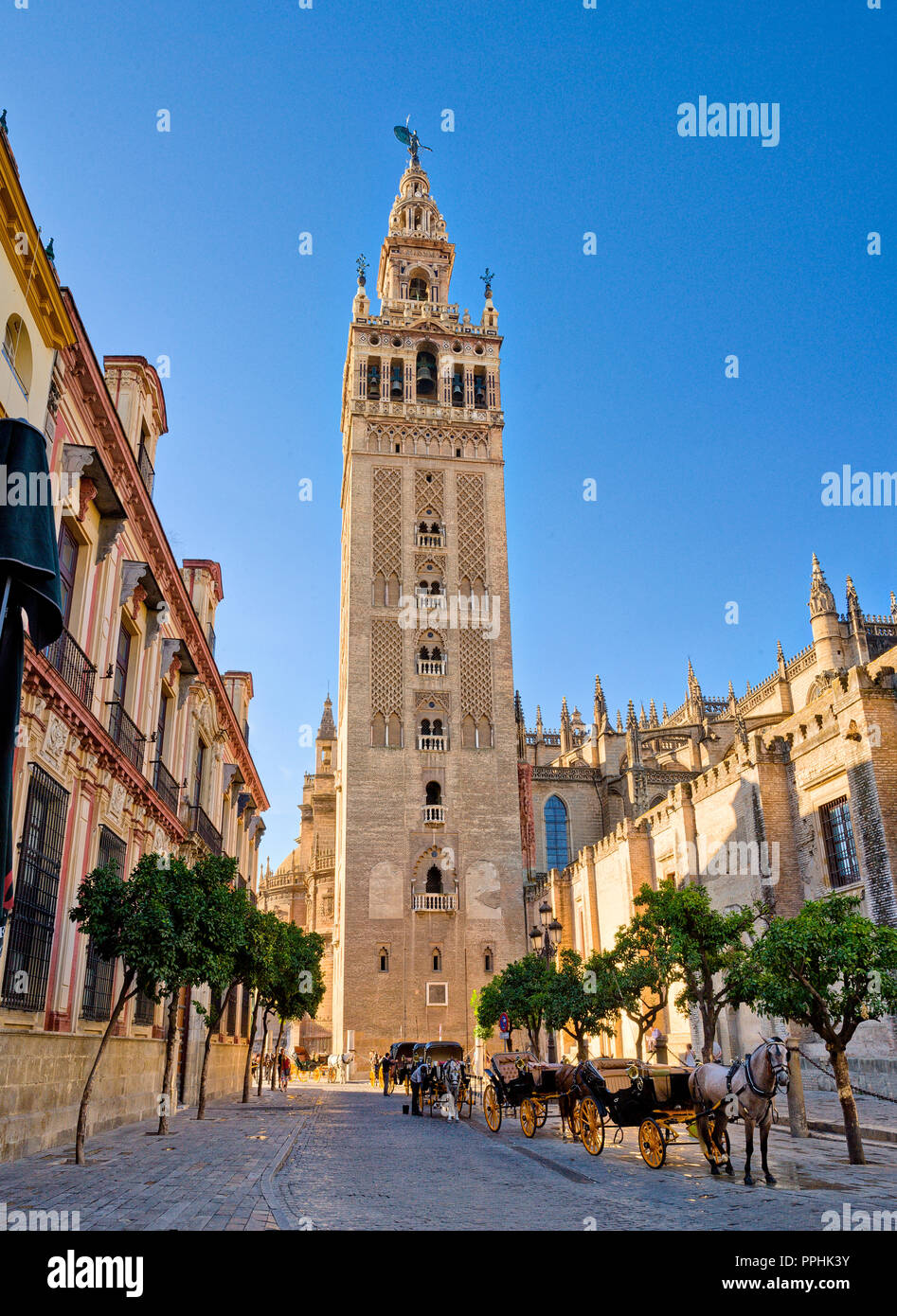
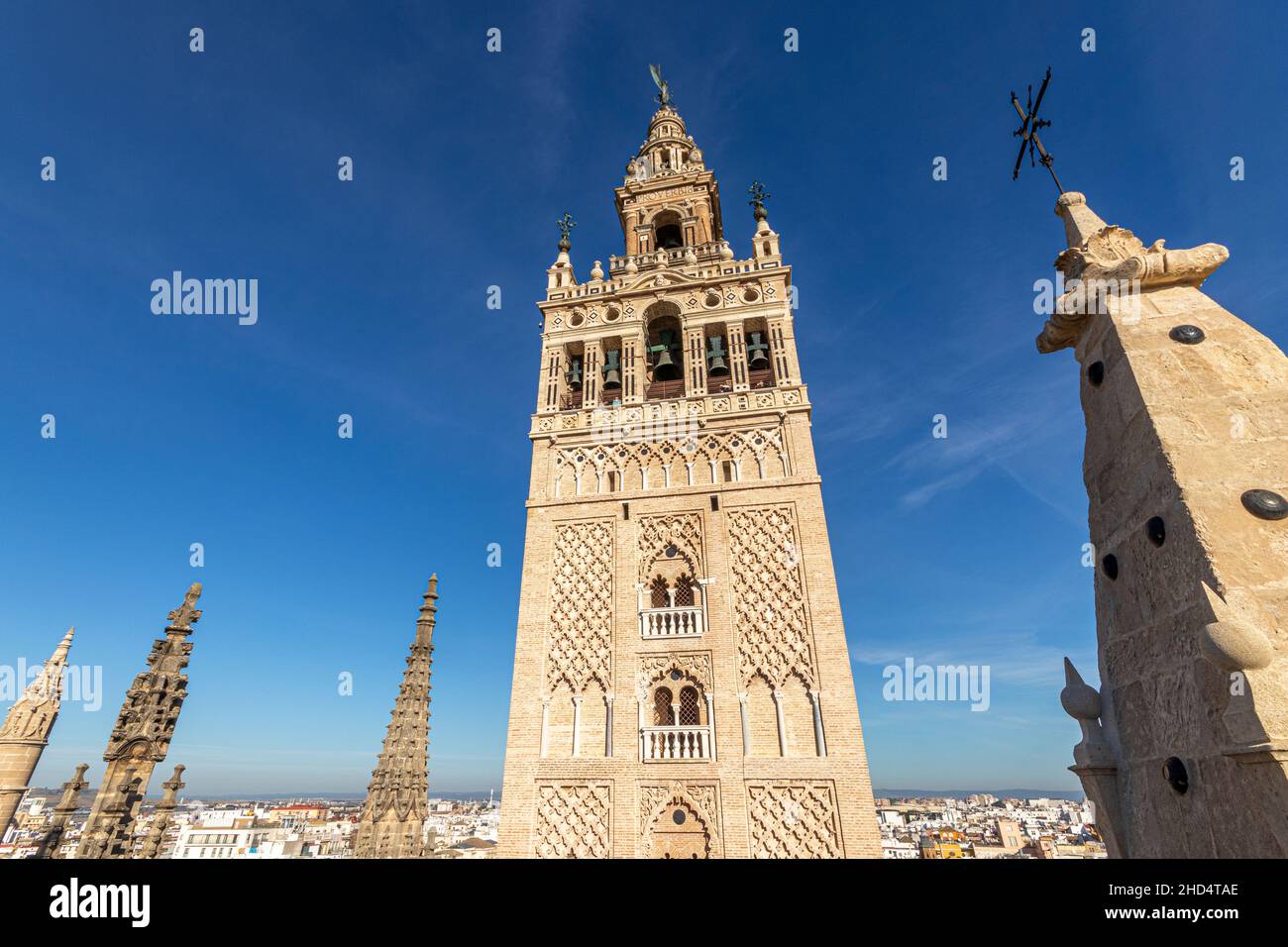
The 12th-century Almohad minaret turned Renaissance bell tower rises roughly 100 meters and is climbed via 35 sloped ramps rather than stairs, originally built wide enough for a muezzin to ascend on horseback. The bronze Giraldillo weather vane crowning the summit gives the tower its name.
The main altarpiece inside the Capilla Mayor is composed of 45 gilded wood-carved panels depicting scenes from the life of Christ, the lifelong work of Flemish craftsman Pieter Dancart. It is considered the largest and richest altarpiece in the world.
A monumental sarcophagus near the cathedral entrance is borne aloft by four statues representing the medieval kingdoms of Castile, León, Aragón, and Navarra. DNA testing has confirmed at least a partial match to the explorer's remains, though other cities also claim portions of his bones.
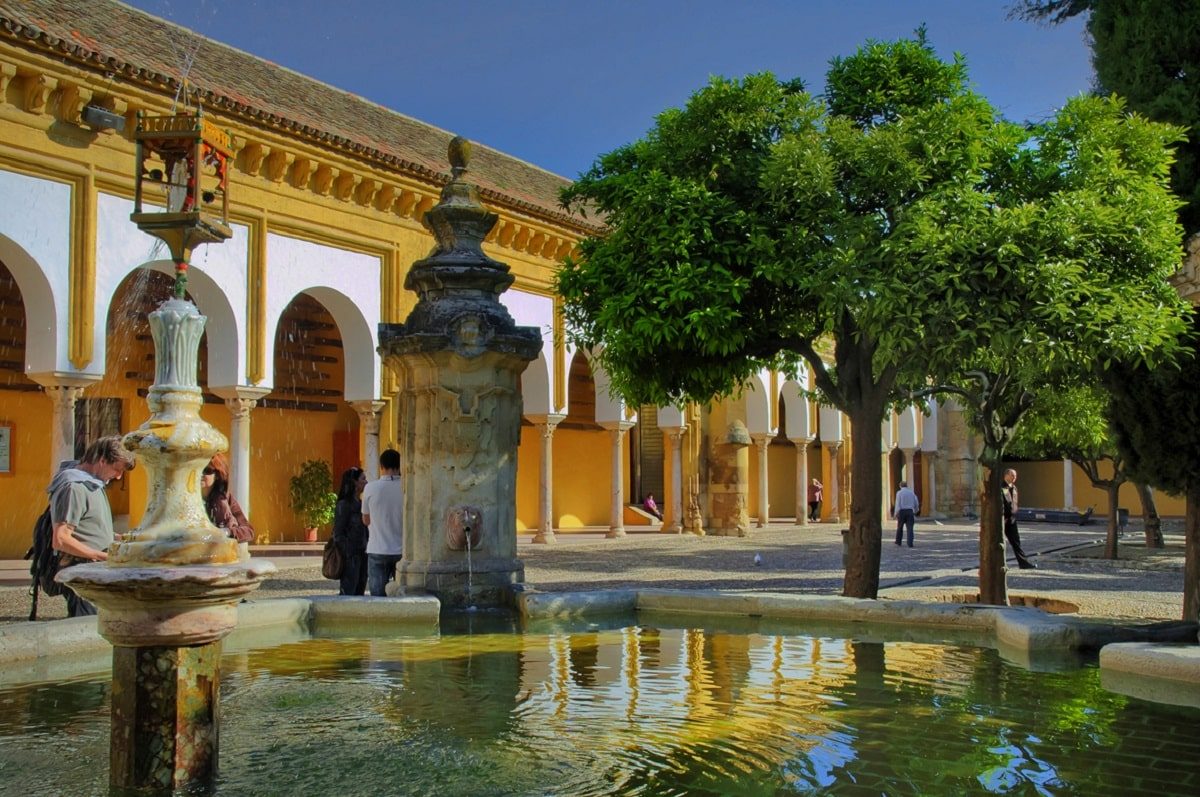
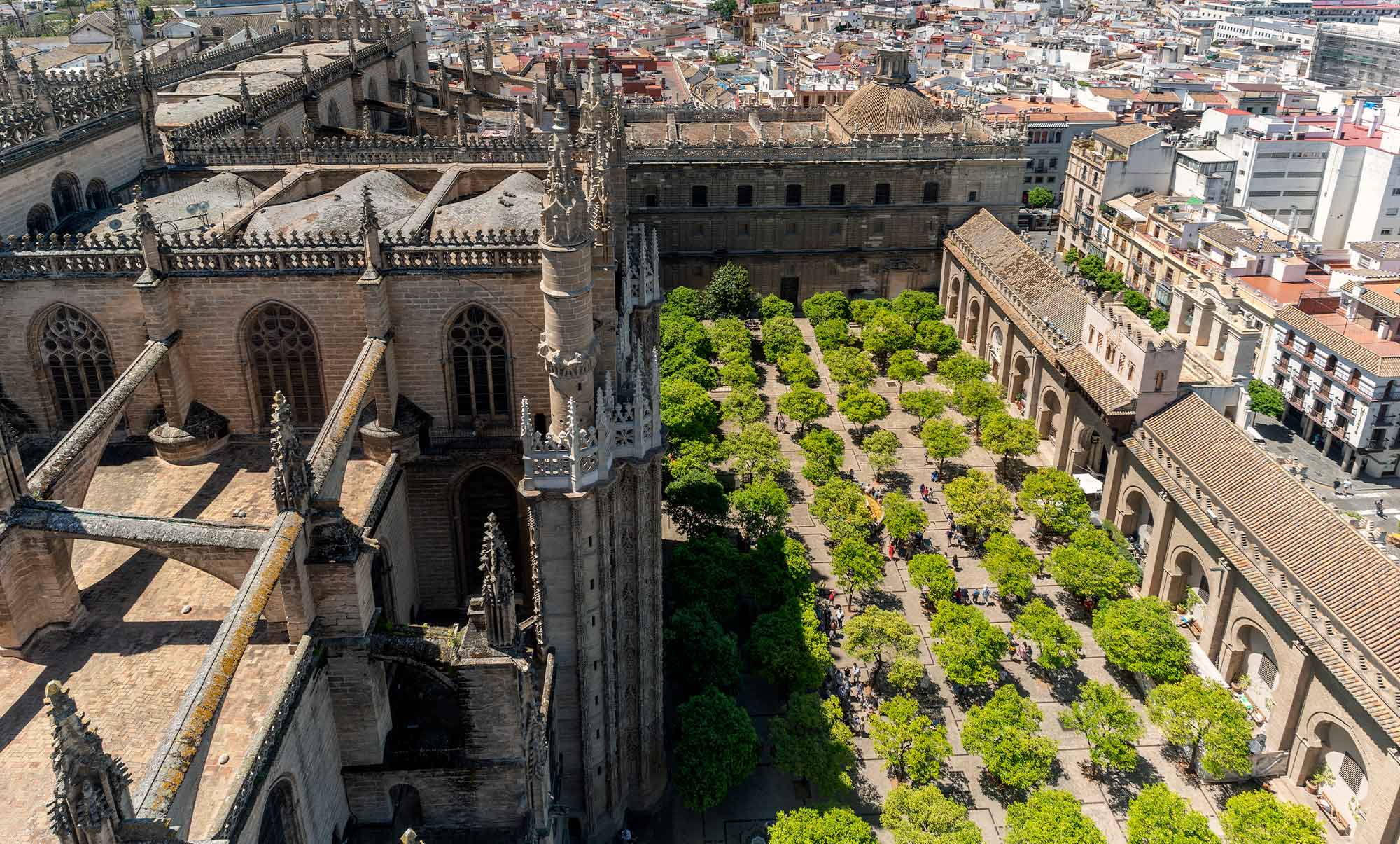
This orange-tree courtyard survives from the original 12th-century mosque that once stood on the site, complete with a stone fountain dating to the Visigothic or Roman era. Irrigation channels cut into the flagstones once watered the trees for ritual washing before prayer.
The Royal Chapel beyond the main altar holds the remains of Ferdinand III of Castile within an ornate Renaissance setting reserved for Castilian monarchs. Access is sometimes restricted during religious observances tied to the chapel's royal tombs.
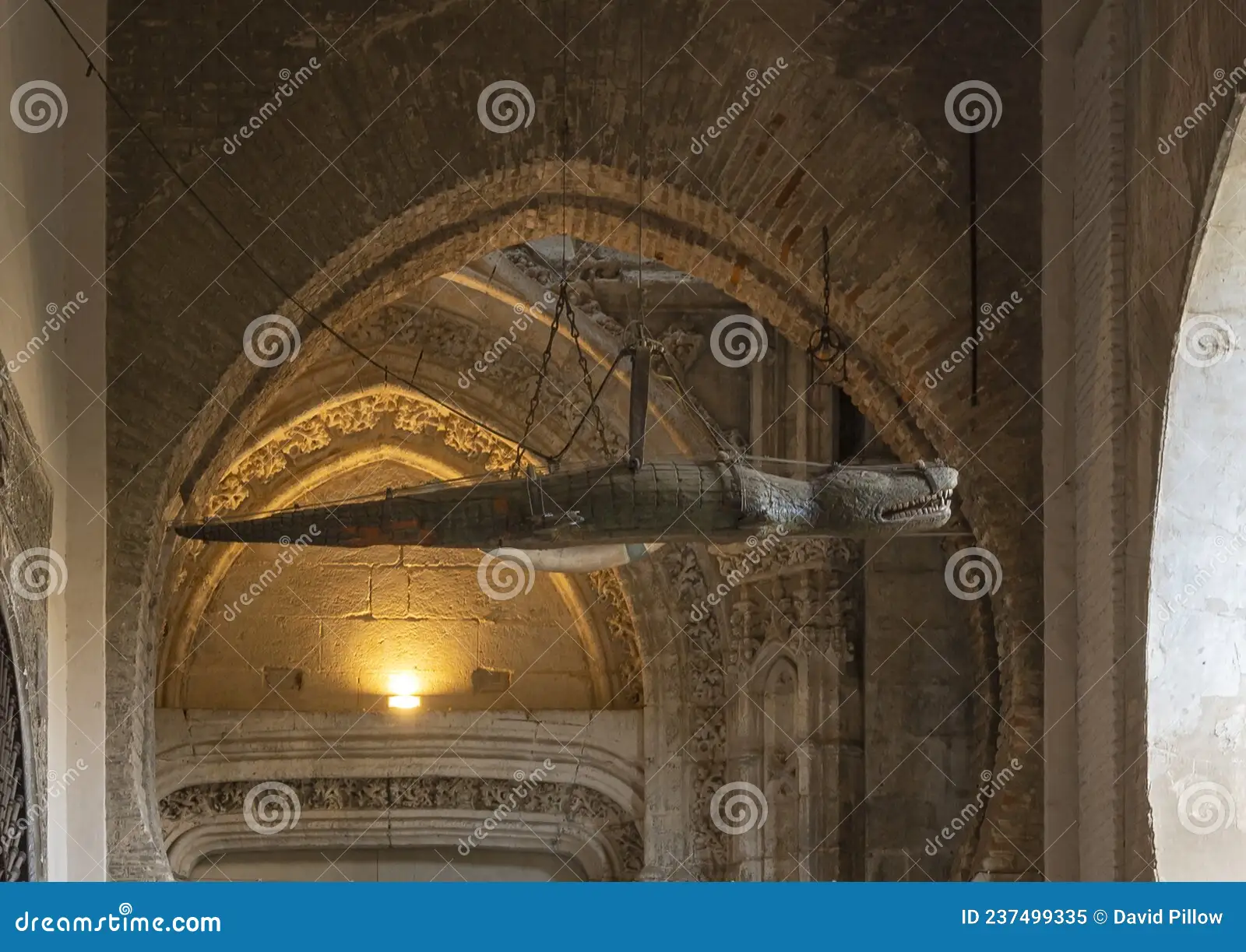
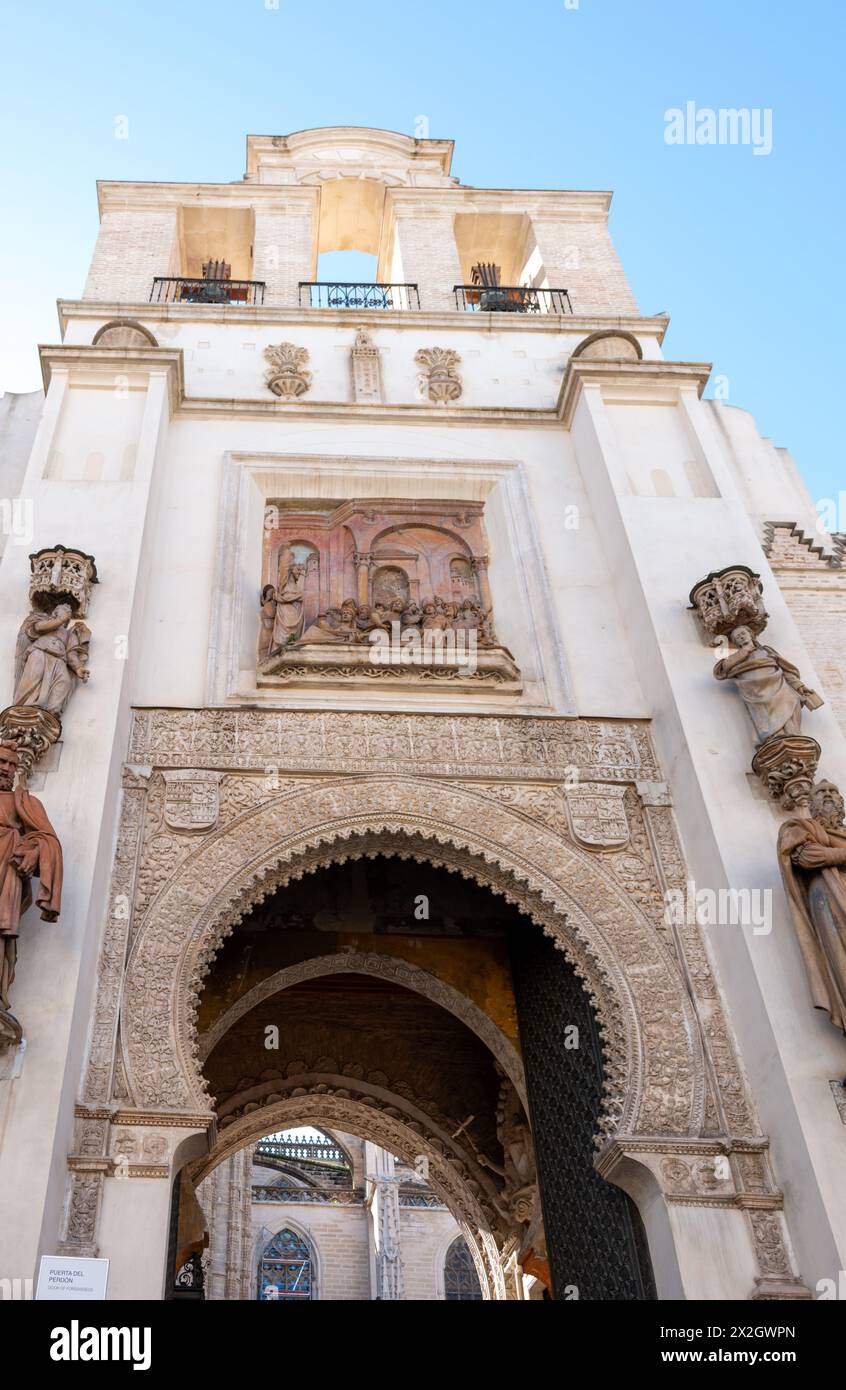
A stuffed crocodile hanging near the Puerta del Perdón entrance dates back to a 13th-century diplomatic gift from the Sultan of Egypt to King Alfonso X during marriage negotiations for his daughter. The wedding never happened, but the crocodile remained as one of the cathedral's most curious relics.
You come in from the glare of Avenida de la Constitución and the temperature drops several degrees at once. The nave opens ahead of you, and for a moment the scale refuses to resolve — the columns read as normal until a person walks past their base.
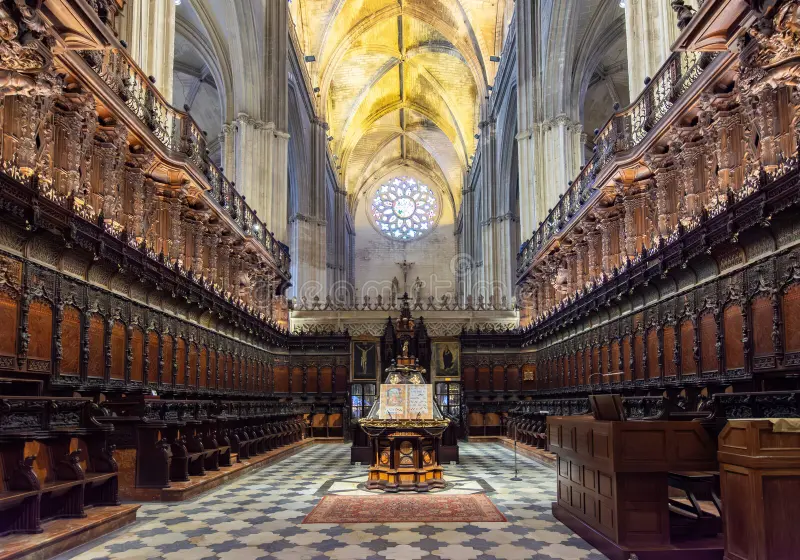
You turn left, following the aisle past the wrought-iron screens, and the gilding of the Capilla Mayor catches whatever light the clerestory is letting through.
You pause at the Columbus monument, where four bronze bearers hold the casket at shoulder height, then continue to the Sacristía Mayor for the Murillos. Ten minutes later you are at the base of the Giralda, and instead of steps you find a ramp: thirty-four shallow inclines that spiral upward, worn smooth, wide enough for two people abreast. You climb slowly. At the top the bells hang close overhead and the whole city flattens out below — tiled roofs, the Guadalquivir, the Alcázar gardens directly south.
Coming down, you exit into the Patio de los Naranjos. The orange trees stand in a grid over old irrigation runnels, and the fountain at the centre uses a Visigothic basin. You sit on the low wall for a few minutes. If you booked one of the Seville Cathedral Tickets tour options with a guide, this is usually where the group reassembles before dispersing into the Barrio Santa Cruz.
All the details about your upcoming adventure in one place
Seville Cathedral Tickets grant entry to the largest Gothic church in the world, a UNESCO World Heritage site built over the former Almohad mosque and home to the tomb of Christopher Columbus. Inside, the Capilla Mayor holds a vast gilded retablo, while the Patio de los Naranjos and the ramped Giralda bell tower survive from the twelfth-century minaret. Most Seville Cathedral Tickets tickets bundle Giralda access, so the climb to the belfry and its rooftop views over the city is usually included.
The bell tower that crowns the largest Gothic church on earth was built as a minaret, and it still stands on Almohad foundations laid in 1184. That single continuity explains much of what visitors meet at Av. de la Constitución, s/n, 41004 Sevilla, Spain.
The chapter that voted in 1401 to replace the old congregational mosque reportedly resolved to build something so vast that later generations would think them mad. Seville Cathedral Tickets tours today lead through the result: five naves, eighty chapels, and a vaulted ceiling that reaches roughly forty-two metres above the crossing.
Scale is only part of the argument. The building matters because it records the exact moment Seville stopped being a frontier city and became the customs house of an empire. Silver from the Americas passed within metres of these walls. The Capilla Mayor holds a gilded retablo begun by Pierre Dancart, an altarpiece of more than a thousand carved figures generally considered the largest in Christendom. Nearby, four heraldic pallbearers carry the monument holding remains attributed to Christopher Columbus, installed in 1899 after a return voyage from Havana. UNESCO inscribed the complex, together with the Alcázar and the Archivo de Indias, in 1987.
Architecturally, the cathedral is a palimpsest rather than a single statement. The Patio de los Naranjos survives from the mosque, its irrigation channels still watering rows of bitter orange trees. The Giralda rises 104 metres, its lower two-thirds Almohad brickwork of sebka lattice, its Renaissance belfry added by Hernán Ruiz the Younger in the 1560s and topped by the weathervane figure locals call the Giraldillo. Inside, the Sacristía Mayor gathers Murillo and Zurbarán canvases beneath a Plateresque dome; the Capilla Real holds the tomb of Ferdinand III. Stained glass by Arnao de Vergara and Arnao de Flandes filters the light that gives the nave its particular cold blue at midday.
A guided Seville Cathedral tour tends to slow visitors down, which suits a building designed to be read rather than scanned. The choir stalls, the treasury silver, the wrought-iron rejas separating chapel from aisle — each rewards a second look. Sunday access differs from the rest of the week, with doors opening at 14:30 and closing at 19:00, a rhythm still shaped by liturgy rather than tourism. General cultural admission is 14 EUR at the ticket office, and the ramp inside the Giralda, built for horsemen rather than walkers, remains one of the few medieval towers in Europe that can be ascended without a single stair. Seville Cathedral Tickets tickets cover that ascent alongside the nave.
The chapter resolved to build a church so vast that later generations would think them mad.
As an active place of worship, Seville Cathedral enforces a modest dress code: shoulders and knees must be covered, and see-through fabrics, swimwear, and sleeveless tops are turned away at the door. Staff at the Puerta del Perdón occasionally offer paper wraps for uncovered shoulders, but it is safer to arrive already dressed appropriately. Comfortable, closed-toe shoes are worth wearing given the stone floors and the ramps up La Giralda.
Bags go through an airport-style security check at the entrance, and staff may ask to inspect larger backpacks by hand. There is no formal cloakroom, so visitors carrying suitcases or oversized bags are generally refused entry and should leave luggage at their hotel beforehand. Security is tightest during morning arrival hours when Seville Cathedral tickets holders and tour groups converge at once.
Personal photography without flash is permitted throughout the nave, chapels, and Patio de los Naranjos, but flash and tripods are restricted to protect the artwork and stained glass. Photography is discouraged during active Mass or liturgical services in the choir area. Drone use anywhere on the grounds is prohibited.
Children generally need a ticket like any adult visitor, and strollers can be brought inside the main cathedral floor, though they cannot be taken up La Giralda's ramps. Kids tend to enjoy spotting El Lagarto, the stuffed crocodile relic near the Puerta del Perdón, and the shaded Patio de los Naranjos offers a good spot for a break. Baby-changing facilities are available in the permanent exhibition area.
Seville Cathedral offers a dedicated wheelchair-accessible route through the main body of the church, along with a free wheelchair loan service for visitors with limited mobility, Braille brochures, and a sign-language guide service. La Giralda tower, however, is not wheelchair accessible; its 35 sloped ramps replace stairs but remain steep and uneven for wheelchair users. Accessible restrooms are located near the Patio de los Naranjos and the permanent exhibition area.
Eating and drinking are not permitted anywhere inside the cathedral or during the La Giralda climb, though sealed water bottles are generally tolerated given Seville's summer heat. There are no cafés or refreshment stands inside the complex, so any food must be finished before entering through the Puerta del Perdón. Chewing gum is also discouraged inside the main nave and choir area.
Book Seville Cathedral Tickets early, queues build fast
Mid-week is typically quietest
Busier ahead of weekend
Heaviest weekday, groups peak midday
Afternoon-only entry, shorter window
Hours
Mon–Sat 11:00–18:00, Sun 14:30–19:00
Opening hours
11:00 – 18:00
Getting there
City-center access via metro and bus
Accessibility
Most experiences are wheelchair-friendly — check individual tours
What to bring
Comfortable shoes, water, phone for mobile voucher
Public transport · 10–15 min · EUR 1.35–1.80 single fare
Take Metro Line 1 to Puerta de Jerez station, then walk about 5 minutes to Av. de la Constitución, or use bus lines C5 or 32 which stop nearby.
Walk · 5–10 min · Free
From Plaza Nueva or the Barrio Santa Cruz, the cathedral is a flat, easy walk through the pedestrianized old town.
Taxi · 5–10 min from most central hotels · EUR 6–10
Taxis and rideshares can drop off directly on Av. de la Constitución outside the Puerta del Príncipe.
Bike · 10–15 min from riverside areas · EUR 1–3 for short rides
Seville's SEVICI bike-share network has docking stations within a few blocks of the cathedral.
Tickets for the general cultural visit, priced at 14 EUR per adult at the ticket office, can typically be cancelled or rescheduled up to 24 hours before the booked entry slot for a full refund. Cancellations made after that window, or no-shows, are generally non-refundable, so confirm the specific terms shown at checkout when booking Seville Cathedral tickets.
Recommended time
1.5-2 hours
Most visitors need 1.5-2 hours to cover the cathedral's naves, chapels, and the Tomb of Christopher Columbus, plus the Giralda climb, though the official estimate for the combined visit is closer to 75 minutes if you move briskly. Add 30 minutes if you're bringing kids or lingering over the tower's ramped ascent, and subtract time only if you skip the bell chamber viewpoint. Booking Seville Cathedral Tickets in advance matters most for queue reality: the 11:00 opening triggers a rapid buildup, and by midday the ticket line and Giralda staircase both slow to a crawl. A skip-the-line Seville Cathedral tour smooths this out but doesn't change how long the interior itself takes to see properly.
Crowd levels through the day
Weather · crowds · average price — dots go green to amber to red as each metric rises.
March to May brings mild temperatures around 20–25°C and blooming orange blossoms in the Patio de los Naranjos, though Semana Santa week draws heavy crowds and can alter access.
June to August is hot, often exceeding 35°C, but mornings right after opening stay comparatively quiet since many visitors avoid the midday heat.
September and October offer cooler evenings and steady visitor numbers, making it a comfortable stretch for exploring both the cathedral and La Giralda.
November to February is the lowest season with cooler air and thinner queues, aside from a brief spike around Christmas markets in the Casco Antiguo.
The best arrival window is 11:00–12:30, since queues build quickly after the doors open and morning light suits the stained glass. Sunday's later 14:30 start means the whole afternoon crowd concentrates into a shorter window.
The Giralda's 35 ramps are smooth stone and can get slick with foot traffic, especially with humidity trapped inside the tower. Sandals or flip-flops make the descent less stable.
Sealed bottles are generally tolerated given Seville's summer heat, but drink outside the main nave rather than near the artwork. Refill points are limited once inside the complex.
December 8 sees the cultural visit suspended for the Feast of the Immaculate Conception, and Holy Week can shift access hours with little notice. Reconfirming the schedule the day before avoids surprises.
Pre-purchased Seville Cathedral tickets are validated at the Puerta del Perdón, but the physical ticket office sits at the Puerta del Lagarto if you need to buy or exchange on-site. The two entrances are adjacent but distinct.
Because the Real Alcázar de Sevilla sits two minutes away on the same plaza, many visitors combine both landmarks in one outing rather than treating them as separate trips.
Shoulders and knees need covering, and staff do turn away visitors in tank tops or short shorts at the door. Bringing a light scarf avoids a last-minute scramble at the entrance.
Av. de la Constitución, s/n, 41004 Sevilla
Main visitor entrance and ticket scan point, facing Calle Alemanes
Get directions
Av. de la Constitución, s/n, 41004 Sevilla
Ticket office location, named for the crocodile relic hanging nearby
Get directionsThe ground beneath Av. de la Constitución has carried sacred architecture for over eight centuries. In 1172 the Almohad caliph Abu Yaqub Yusuf ordered a congregational mosque raised on this site. Work on its minaret began in 1184 under the architect Ahmad Ibn Baso. The tower was completed in 1198, crowned with four gilded bronze spheres. Castilian forces took the city in 1248, and the mosque was consecrated as a cathedral without being demolished. An earthquake in 1356 dislodged the minaret's spheres. The old structure was judged unsound, and the chapter resolved on replacement. In July 1401 the cathedral chapter agreed to build anew. A later chronicler recorded the intention to raise a church so large that those who saw it would think the builders mad. Demolition of the mosque's prayer hall began in 1433. The master masons included Ysambret, Carlin of Rouen and Juan Normán, working in a late Gothic idiom drawn from northern Europe. The main body was declared finished in 1506. Five years later the crossing vault collapsed, and Juan Gil de Hontañón rebuilt it. A second collapse followed in 1888 after a tremor, closing the building for years of repair. Visitors booking Seville Cathedral Tickets today stand under vaults twice reconstructed. The Almohad minaret survived every campaign. Hernán Ruiz the Younger added its Renaissance belfry between 1558 and 1568, topped by the weathervane figure that gave the Giralda its name. Inside, the Retablo Mayor carved by Pieter Dancart from 1482 remains the largest altarpiece of its kind. The Patio de los Naranjos preserves the mosque's ablution courtyard. Columbus, who died in Valladolid in 1506, was interred here in 1898; DNA testing in 2006 confirmed the remains. UNESCO inscribed the cathedral, the Alcázar and the Archivo de Indias together in 1987. Guided Seville Cathedral Tickets tours reach the Sacristía Mayor and the chapter house, while a Seville Cathedral Tickets tour of the Giralda ramp climbs the original Almohad masonry. Those holding Seville Cathedral Tickets tickets encounter roughly nine hundred years of continuous building among Seville landmarks.
Caliph Abu Yaqub Yusuf orders a congregational mosque built on the present site.
The minaret now known as the Giralda is constructed under Ahmad Ibn Baso and completed with gilded bronze spheres.
Castilian forces take Seville and the mosque is consecrated as a Christian cathedral.
The cathedral chapter votes to demolish the old mosque and raise a Gothic church in its place.
Master masons including Carlin of Rouen and Juan Normán complete the main Gothic body.
Hernán Ruiz the Younger adds the Renaissance belfry and weathervane to the Almohad minaret.
An earth tremor collapses the crossing vault, forcing years of structural repair.
UNESCO inscribes the cathedral, the Alcázar and the Archivo de Indias as a single World Heritage Site.
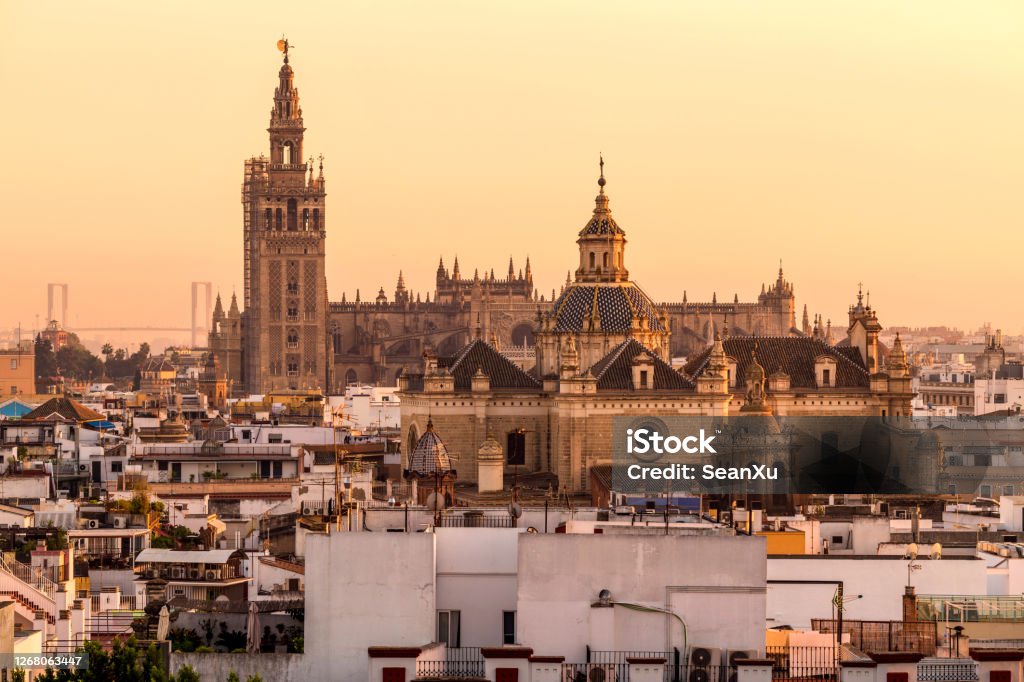
Climb the 35 ramps to the belfry beside the bronze bells for a rooftop panorama over the flying buttresses, the Alcázar gardens, and the Santa Cruz quarter. Arriving with your Seville Cathedral Tickets between 11:00 and 12:30 catches clear morning light on the rooftops before afternoon haze sets in. Stand at the north-facing gaps in the balustrade for the cleanest skyline framing.
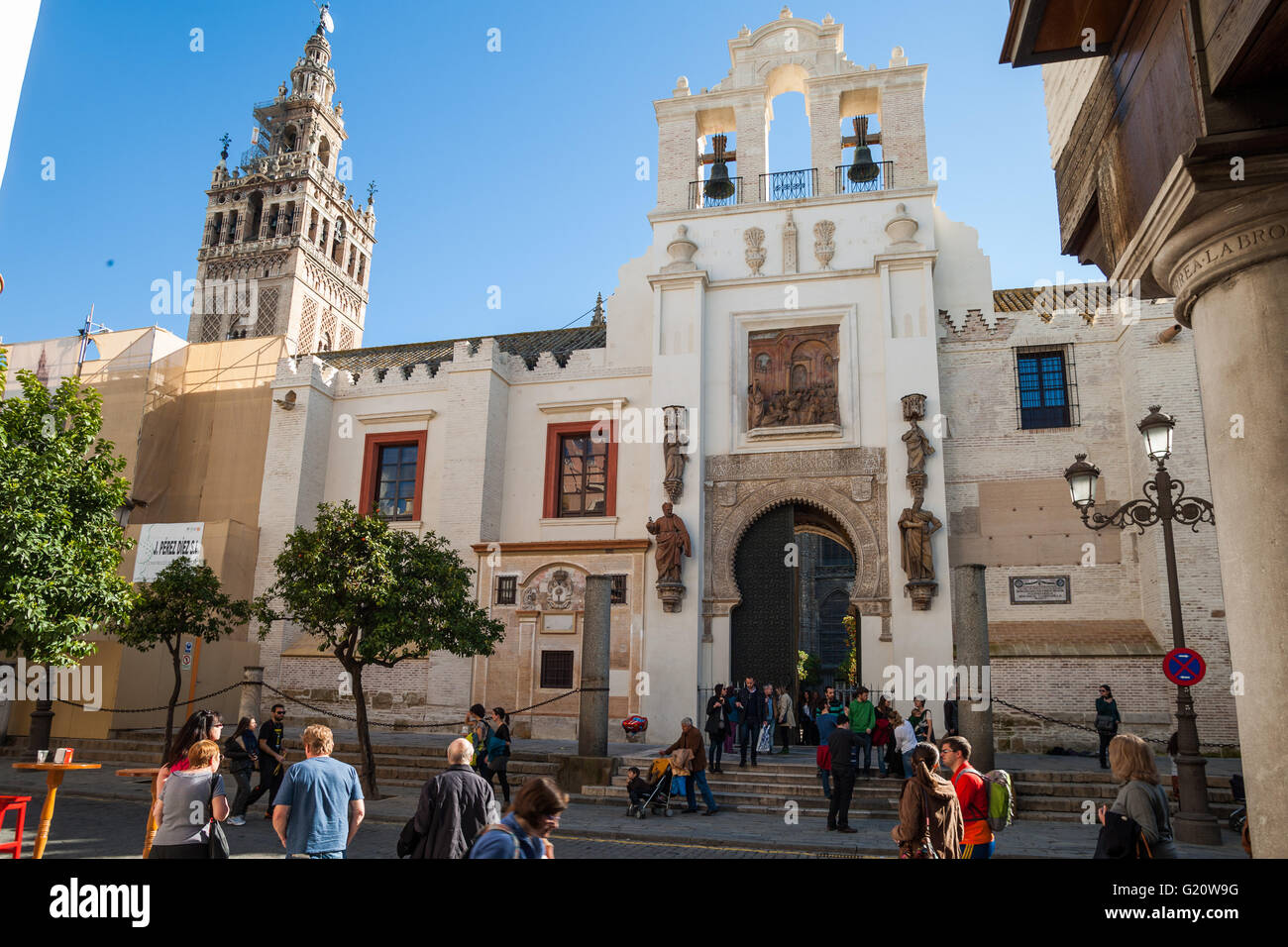
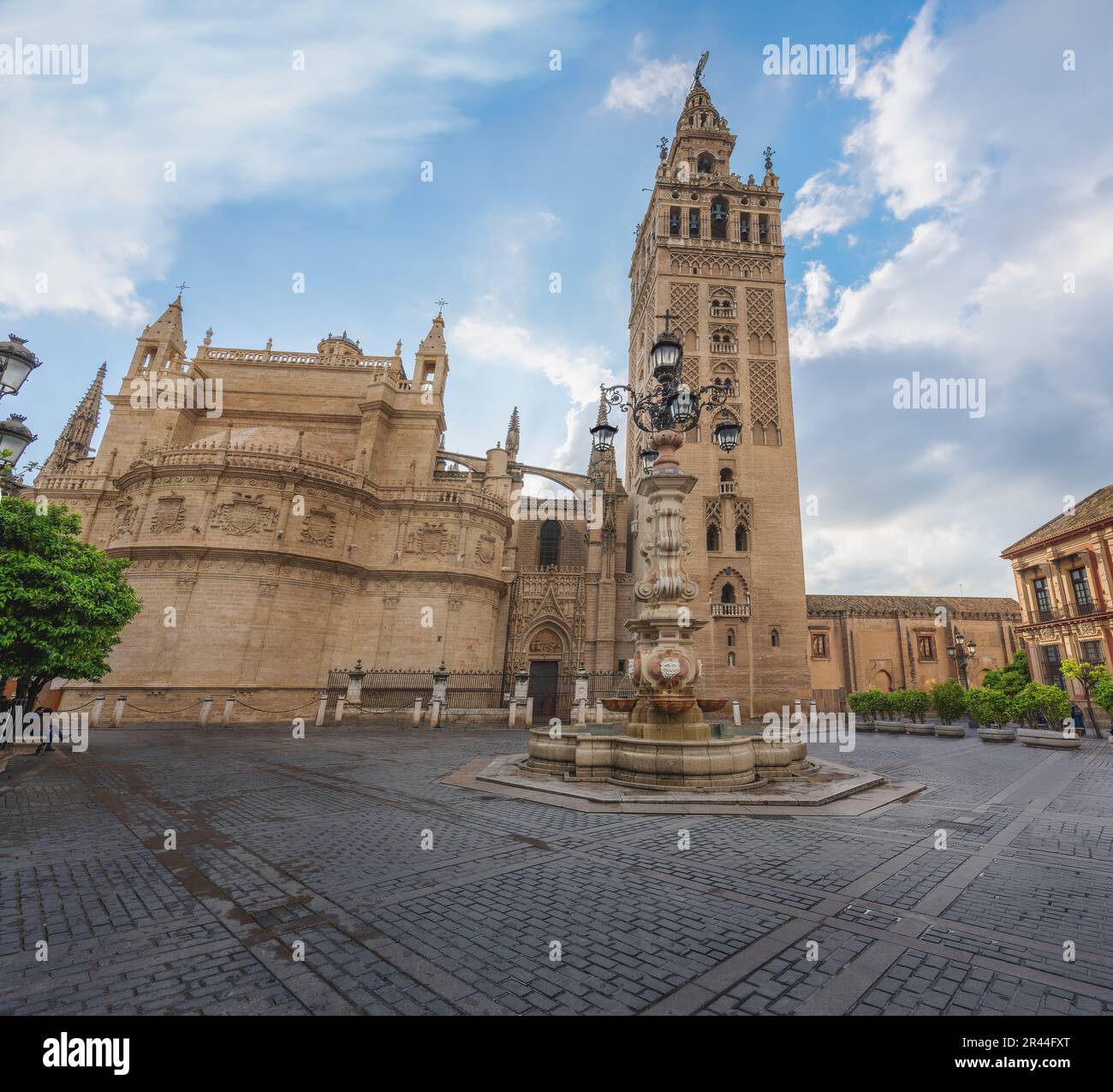
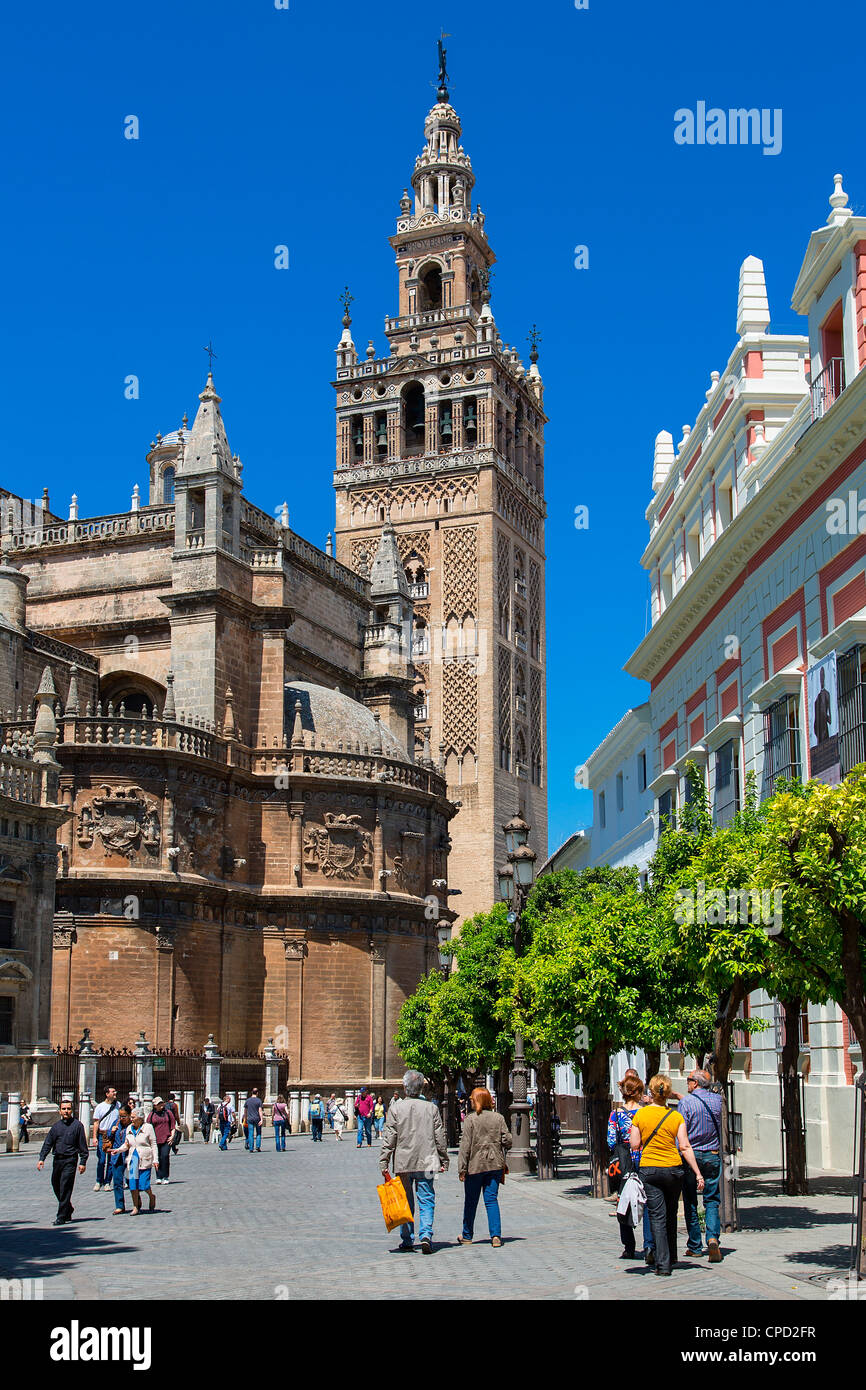
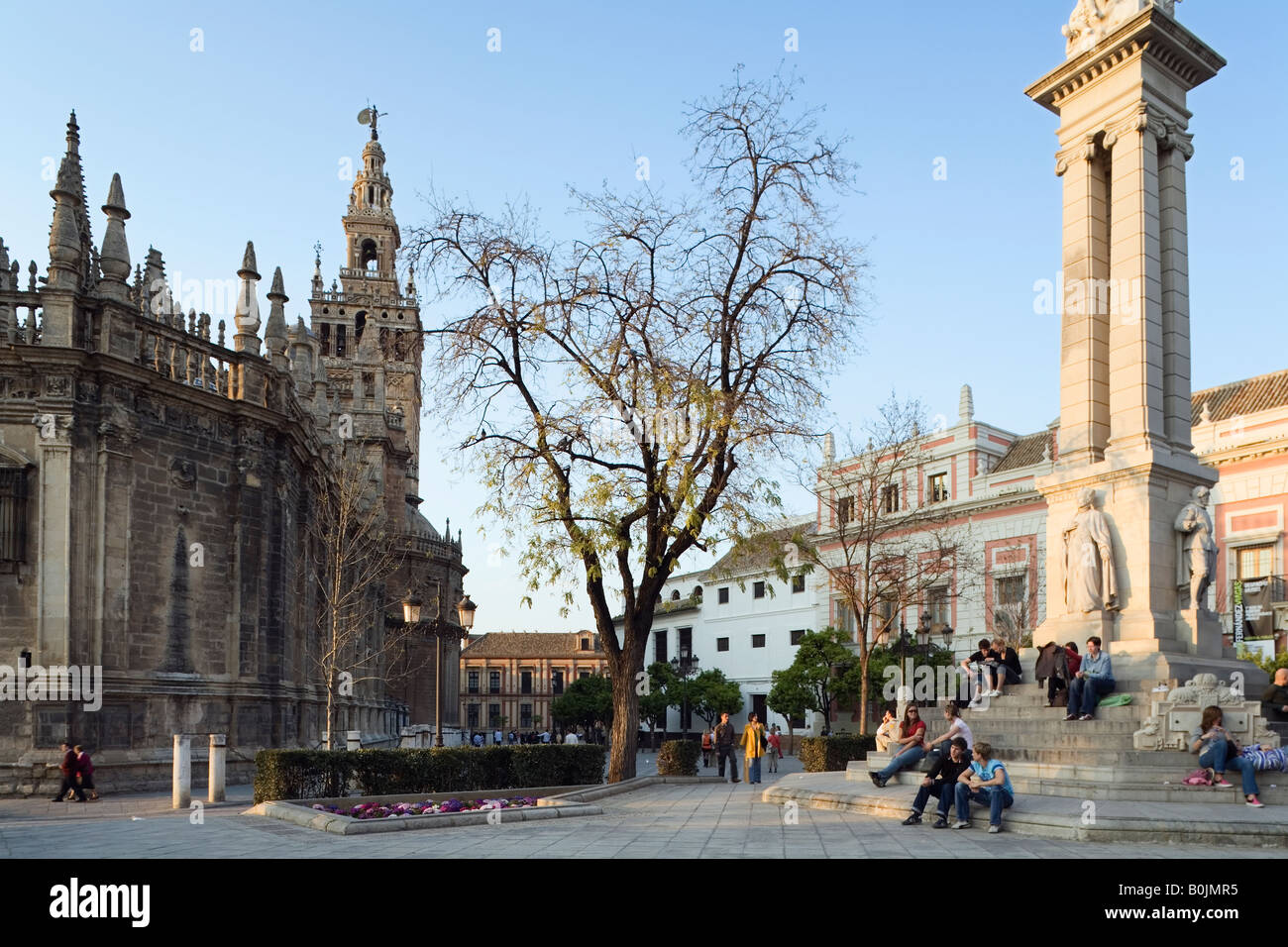
The classic ground-level shot: the Giralda and the cathedral's north facade rising together above the fountain and lamppost at the square's center. Position yourself near the Fuente de los Reyes for a full vertical frame, or use a horse-drawn carriage in the foreground for scale.
This orange-tree courtyard inside the cathedral complex frames the Giralda through rows of trees and the old ablutions fountain. Enter after ticket control and shoot from the shaded arcade along the perimeter, where the geometric tree rows lead the eye toward the tower.
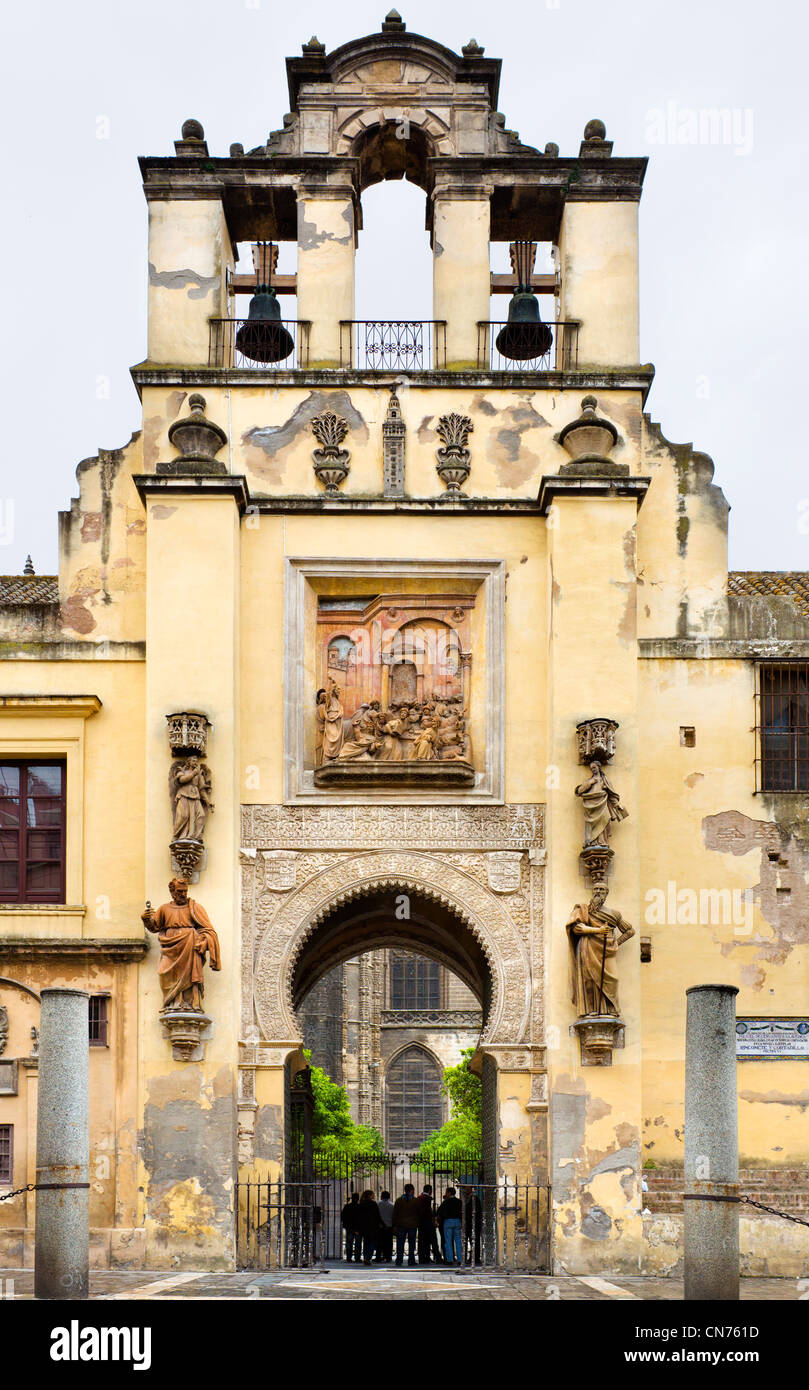
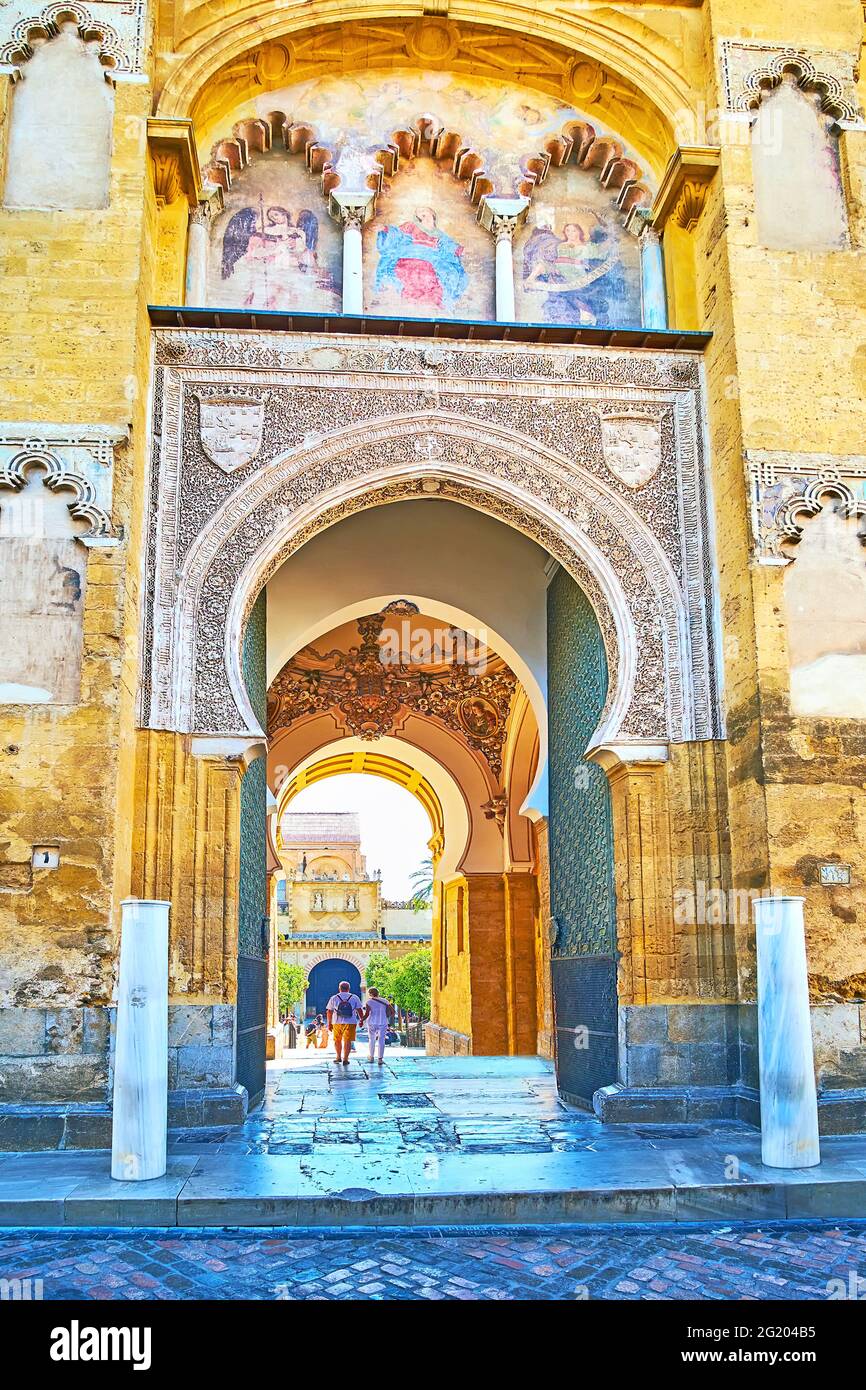
The horseshoe-arched Almohad gateway linking Calle Alemanes to the Patio de los Naranjos makes a striking close-up shot, with its Mudéjar plasterwork and flanking terracotta statues. Shoot straight-on from the street side for symmetry, or from just inside the courtyard looking back through the arch.
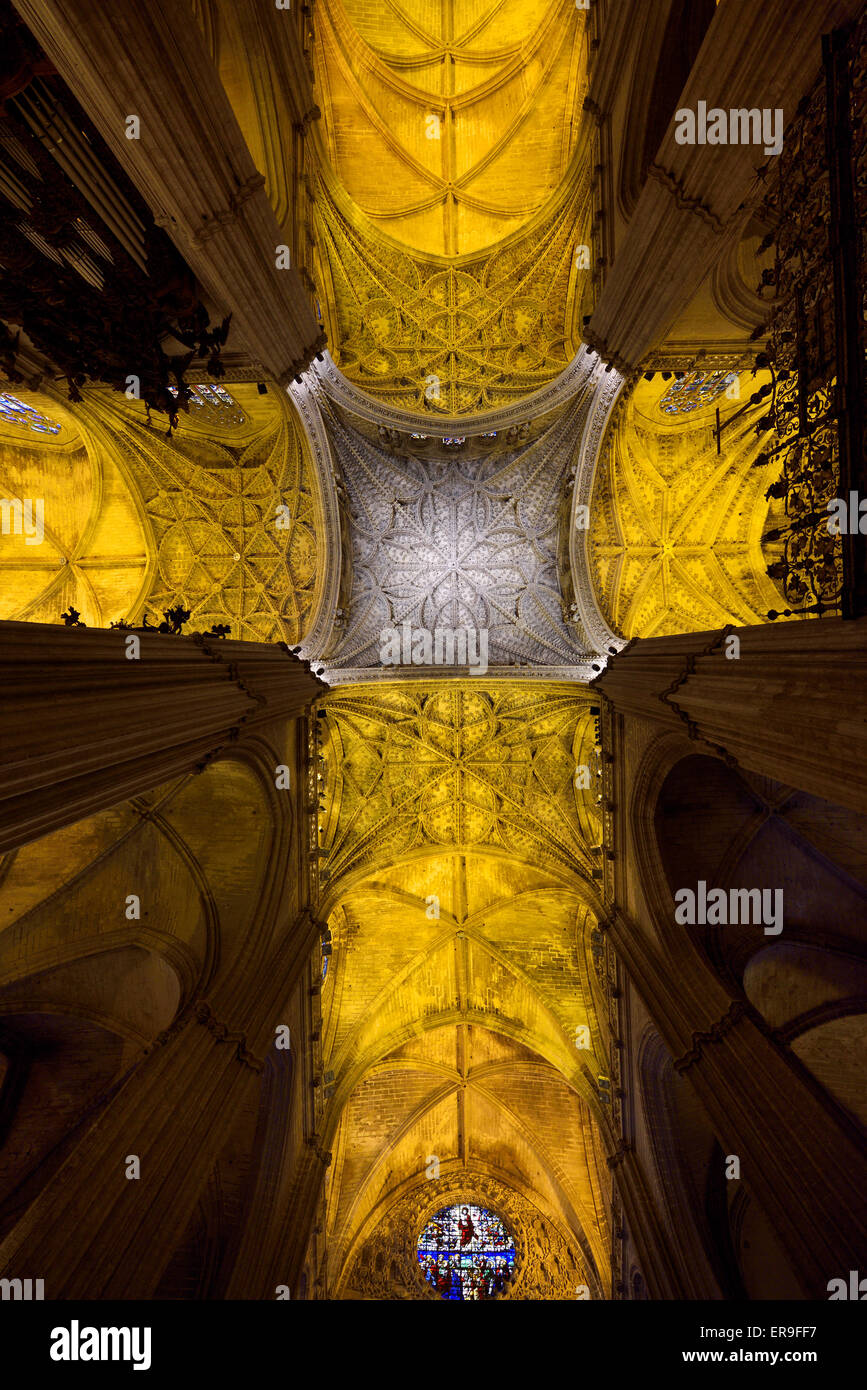
Inside, the soaring Gothic nave lined with stained glass rewards an early visit, when low sun angles light the windows along the south side. Stand near the crossing beneath the dome and look up toward the choir screen and retablo mayor for the widest vertical composition.
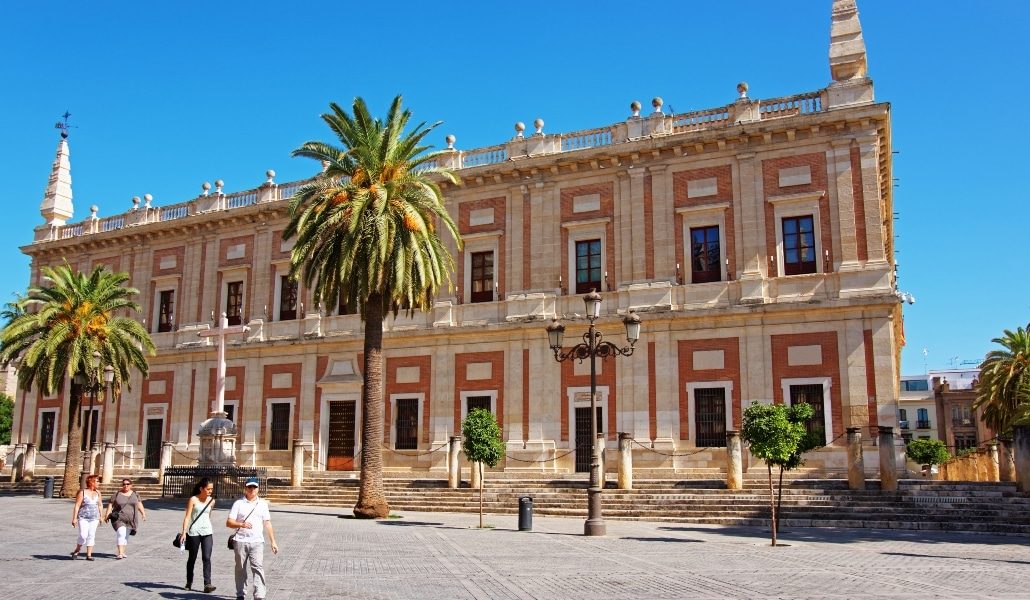
This open square between the cathedral, the Alcázar, and the Archivo de Indias gives a wide-angle view combining the Giralda with the cathedral's south flank. It works well for daytime shots and stays less crowded than the main plaza in front of the entrance.
There is no dining inside the cathedral itself, so most visitors planning Seville Cathedral Tickets end up eating on Av. de la Constitución or ducking into the narrow lanes of Santa Cruz just behind it.
A long-running local favorite near the Giralda tower, popular for tortilla and grilled squid; fills up fast at 13:30, so arrive just after your Seville Cathedral Tickets tour ends to grab a table.
Order at the bar and let staff chalk your tally on the counter; a lively, standing-room spot for octopus and croquetas, best suited to a quick bite between sights on a broader Seville landmarks walk.
Two small terraces near the cathedral serve pork cheeks and spinach with chickpeas; it opens for lunch earlier than most Sevillian kitchens, handy before an afternoon skip-the-line Seville Cathedral tour.
Steps from the cathedral entrance, with tapas, Spanish omelette, and artichokes on the menu; convenient for a relaxed lunch right after visiting, though prices run slightly above the surrounding streets.
A shaded gelato counter on Av. de la Constitución, useful for cooling off in summer heat before or after Seville Cathedral Tickets tours without committing to a full sit-down meal.
Real experiences from real travelers
We climbed the Giralda expecting stairs and got 34 gentle brick ramps instead, which my knees appreciated in the June heat. From the top the terracotta roofs run all the way to the Guadalquivir and you can just make out the Torre del Oro. Holding our Seville Cathedral Tickets saved a lot of standing around on hot pavement.
Photos do not prepare you for the ceiling height once you step past the entrance. The Retablo Mayor alone held us for twenty minutes, all that gold catching the late light through the stained glass. Our Seville Cathedral Tickets tour guide pointed out details in the carving we would have walked straight past.
Stepping in from the July street into that cold stone air was the best part of our afternoon. The Columbus tomb with the four bronze bearers is smaller than expected but genuinely striking up close. Worth reading a little about the cathedral before you go.
The Catedral de Sevilla is magnificent and the Patio de los Naranjos smelled wonderful in March with the blossom out. It was crowded around the Columbus tomb and the ramp up the bell tower gets congested when a group is descending. Still glad we came, and the audio commentary was clear.
The courtyard of orange trees was my favourite corner, all irrigation channels and shade and the minaret rising behind it. Inside, the sheer number of side chapels means you keep finding something new. Buying Seville Cathedral Tickets tickets ahead let us walk straight past a long queue.
We reached the belfry just as the bells rang and the sound goes right through you. The brick ramps are wide and the arched openings frame different parts of the city as you spiral up. One of the Seville landmarks I would happily do twice.
Winter light through the stained glass was soft and the place was calm compared to what friends described in summer. The Gothic vaulting and the choir stalls are extraordinary craftsmanship. A guided visit to Seville Cathedral gave the space context we would otherwise have missed.
It is the largest Gothic cathedral in the world and you feel that in your legs by the end. The Giralda's Almohad brickwork at the base against the Renaissance top section is a strange and lovely combination. Comfortable shoes matter more than anything else here.
August in Seville is punishing and the interior was a genuine relief. The organ pipes above the choir are worth looking up for, and the sacristy holds more silver than I expected. Seville Cathedral Tickets tours run frequently enough that we found a slot easily.
Mid-afternoon the coloured light lands directly on the stone floor of the transept and people stop to photograph it. The scale of the columns is what stays with me, that and the smell of wax and cool stone. A proper piece of UNESCO heritage rather than just a photo stop.
Everything you need to know for your journey
Seville Cathedral is open Monday through Saturday from 11:00 to 18:00, and Sunday from 14:30 to 19:00.
The general cultural visit costs 14 EUR per adult, purchased at the ticket office or in advance for Seville Cathedral tickets.
Yes, a dedicated wheelchair route runs through the main cathedral floor along with a free wheelchair loan service, though La Giralda tower itself is not wheelchair accessible due to its sloped ramps.
Large suitcases and oversized backpacks are not allowed inside, and all bags pass through a security check at the entrance; small day bags are the safest option for a Seville Cathedral Tickets visit.
Personal, non-flash photography is allowed throughout the nave, chapels, and Patio de los Naranjos, but tripods, selfie sticks, and flash are restricted to protect the artwork.
Arriving between 11:00 and 12:30 offers the shortest queues and the best morning light on the stained glass, while the November-to-February low season generally means thinner crowds overall.
Yes, as an active place of worship, shoulders and knees must be covered, and see-through or sleeveless clothing is not permitted at the entrance.
No, eating and drinking are not allowed inside the cathedral or during the Giralda climb, though a sealed water bottle is generally tolerated given the heat.
Metro Line 1 to Puerta de Jerez puts you a five-minute walk from the entrance at Av. de la Constitución, s/n, 41004 Sevilla, and several central bus lines stop nearby as well.
Yes, families are welcome, and children enjoy spotting the stuffed crocodile relic near the entrance, though strollers cannot be taken up La Giralda's ramps.
Tickets can typically be cancelled or rescheduled up to 24 hours before the booked entry slot for a full refund, with the 14 EUR fee non-refundable after that window or for no-shows.
The Real Alcázar de Sevilla and the Archivo General de Indias both sit on the adjoining Plaza del Triunfo, making it easy to pair a Seville Cathedral Tickets tour with a Seville landmarks itinerary in a single outing.
A Mudéjar royal palace complex with elaborate tiled courtyards and gardens, sharing Plaza del Triunfo with the cathedral. Still a working royal residence, its upper floors remain in use by the Spanish royal family.
A UNESCO-listed Renaissance building holding centuries of documents on Spain's colonial history in the Americas. It sits directly across Plaza del Triunfo from the cathedral steps.
A palm-lined plaza connecting the cathedral, the Alcázar, and the Archivo General de Indias. It commemorates Seville's survival of the 1755 Lisbon earthquake.
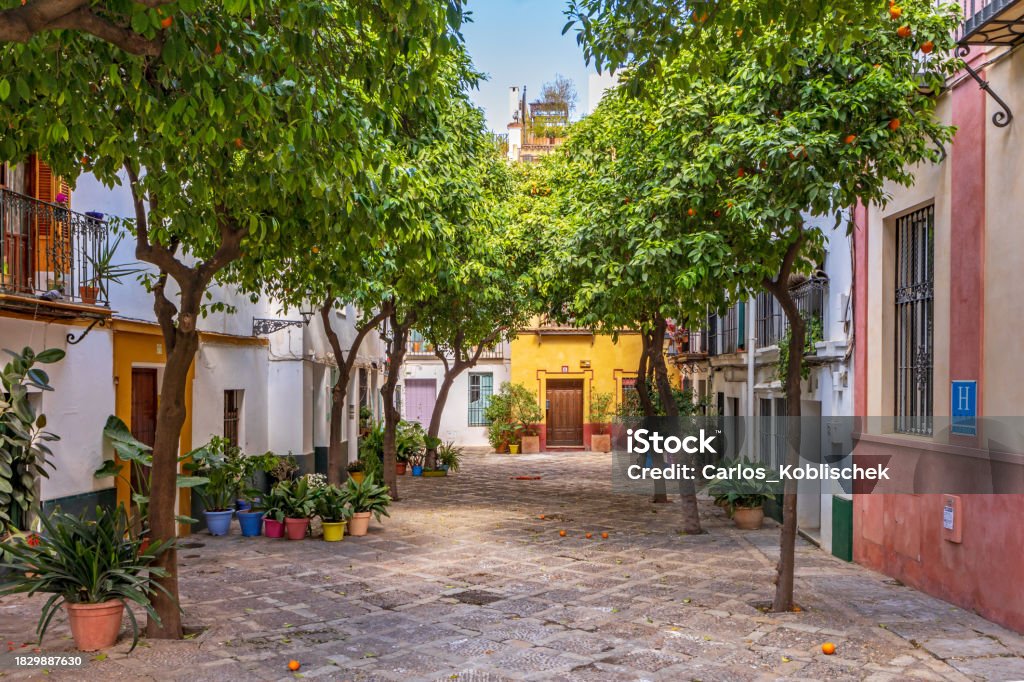
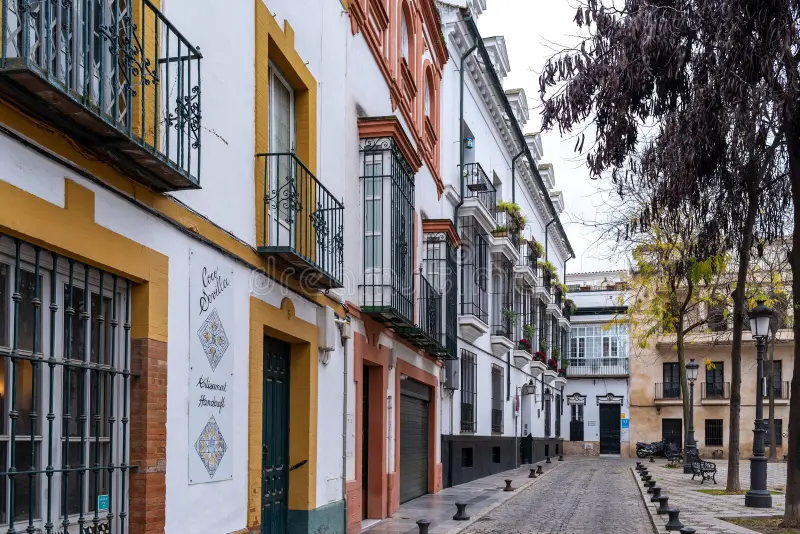
The former Jewish quarter's tangle of whitewashed lanes and orange-tree courtyards sits just northeast of the cathedral. Many alleys are too narrow for cars, keeping it quiet and pedestrian-only.
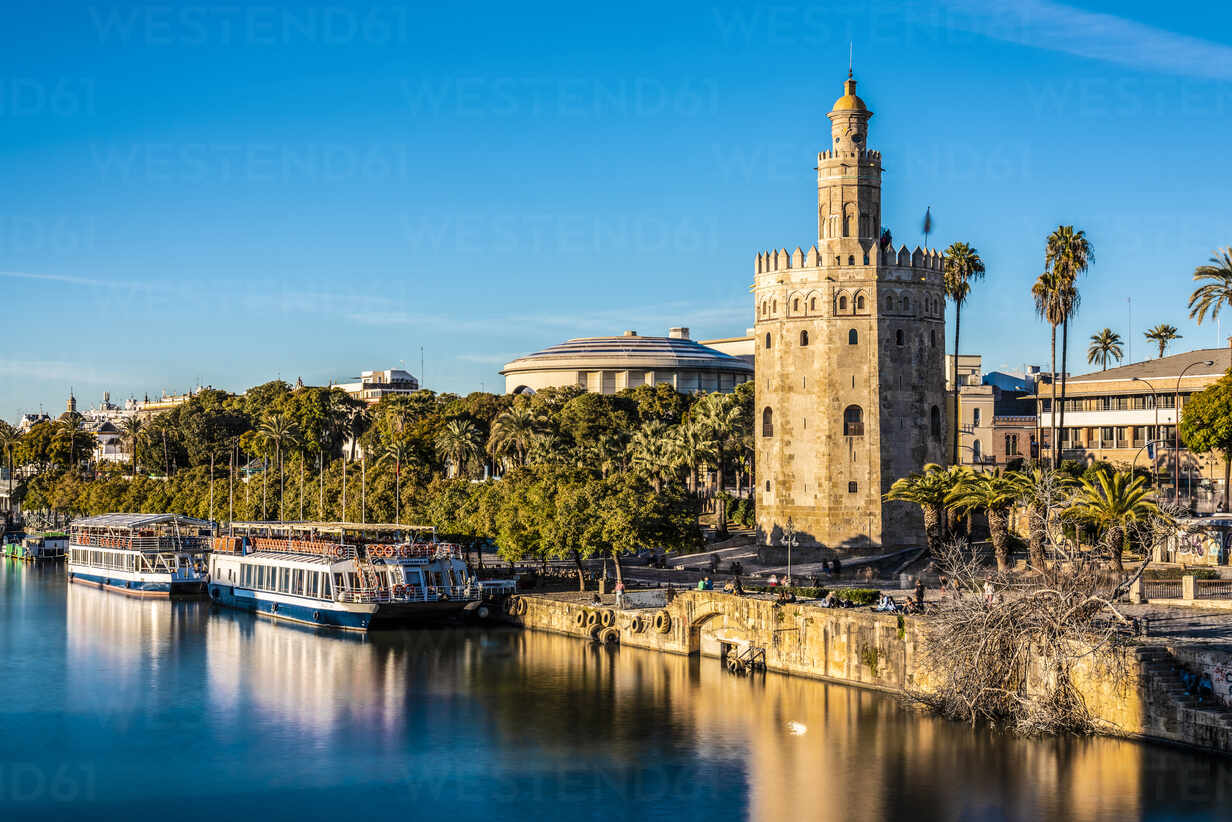
A 13th-century Almohad watchtower on the Guadalquivir riverbank, once used to control river access to the city. It now houses a small maritime museum.
Seville's historic core surrounding the cathedral, packed with converted 18th-century townhouses and rooftop terraces facing La Giralda.
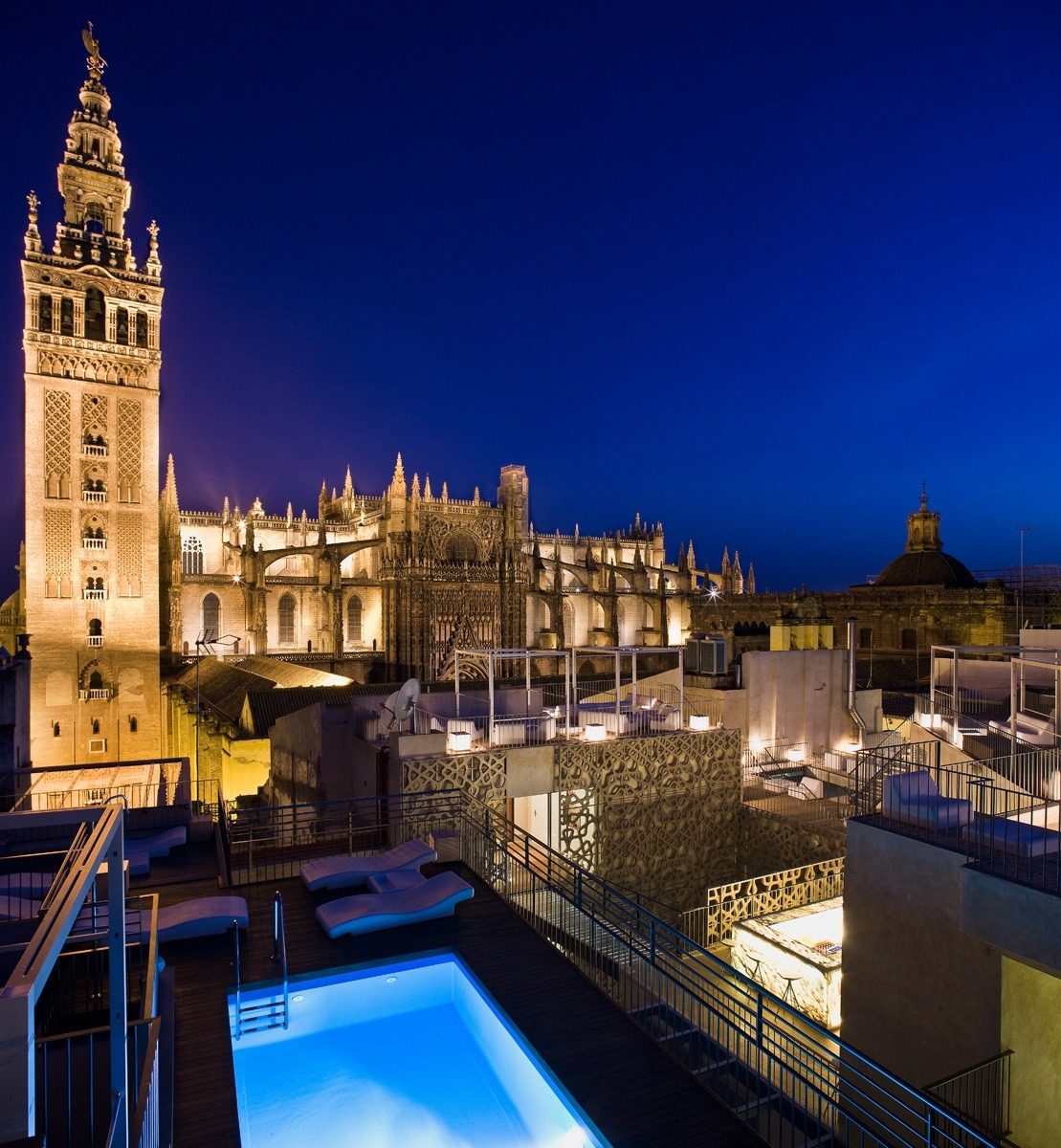
A rooftop-terrace hotel directly facing the cathedral's western façade, popular for sunset views of the Giralda.
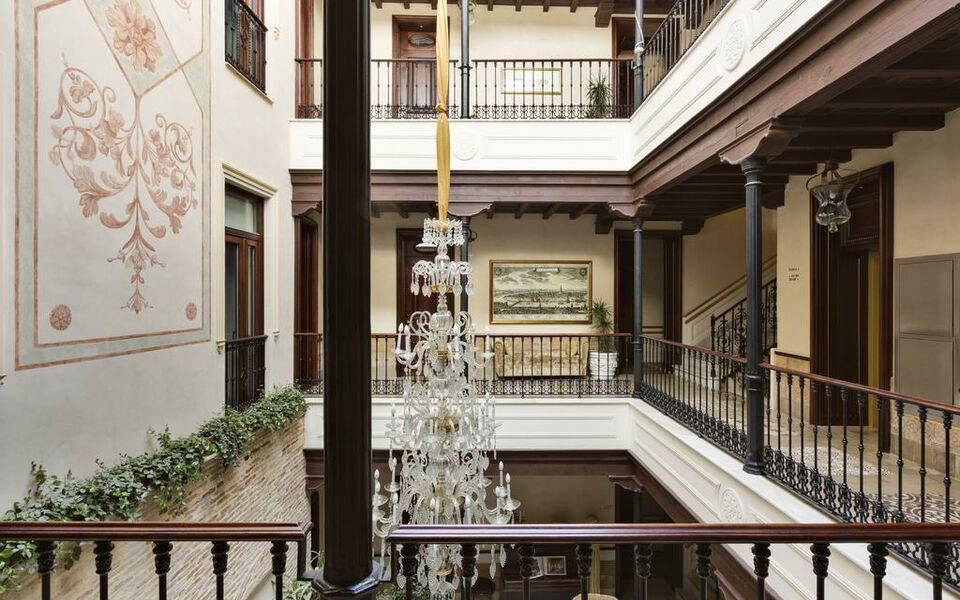
A restored 19th-century mansion in Barrio Santa Cruz with a plant-filled interior courtyard and a small rooftop plunge pool.
Small family-run guesthouses tucked into the former Jewish quarter's narrow lanes, generally quieter than hotels directly on Av. de la Constitución.
Join thousands of happy travelers who have discovered this incredible experience
Book Your Experience Now